Biotechnology Frontiers: Synthetic Biology and AI-Driven Drug Discovery
An overview of modern biotech, from CRISPR gene editing techniques to the impact of computational design on protein folding and drug development.
Robotics · Global · 2026-07-06 · 12 min read · By John Awab
A child born with sickle cell disease receives a one-time treatment that edits the faulty gene in their own cells — and the disease that would have shaped their whole life is functionally cured. Engineered microbes brew life-saving drugs, insulin, and even sustainable materials in giant vats. AI designs new medicines and predicts the shape of proteins in seconds. This is biotechnology in 2026 — a field where biology has become programmable, and where the convergence of genetic engineering, computing, and automation is accelerating at a pace that would have seemed impossible a generation ago.
This guide explains what biotechnology is, the gene-editing revolution led by CRISPR, synthetic biology, how AI is transforming the field, precision medicine, the market, and the serious ethical questions involved. (Market figures vary widely by source; several health applications are discussed for information only, not as medical advice.)
What Is Biotechnology?
Biotechnology is the use of living organisms, cells, and biological systems — or their molecular components — to develop products and technologies that improve our lives. The word combines "bio" (life) and "technology," and the field spans an enormous range: from medicines and diagnostics to genetically improved crops, industrial enzymes, biofuels, and sustainable materials. While humans have used basic biotech for millennia (fermenting bread, beer, and cheese), modern biotech is a precise engineering discipline empowered by the ability to read, edit, and increasingly design DNA itself.
What makes 2026 a landmark moment is convergence: biology is merging with artificial intelligence, automation, and engineering into what many call a new biotech revolution — turning cells into programmable systems and dramatically accelerating what's possible.
The Branches of Biotechnology
Biotechnology is often organized by application area, traditionally color-coded:
- Medical (red) biotechnology — gene and cell therapies, drugs, vaccines, and diagnostics; the highest-profile branch.
- Agricultural (green) biotechnology — improving crops and livestock for yield, disease resistance, and climate resilience.
- Industrial (white) biotechnology — engineering microbes and enzymes to produce chemicals, biofuels, and bio-based materials sustainably.
- Marine (blue) biotechnology — harnessing aquatic organisms.
Cutting across all of these is bioinformatics — the computational analysis of biological data — which has become essential as biology generates vast datasets. Together these branches show biotech's reach far beyond medicine into food, materials, energy, and the environment.
CRISPR and the Gene-Editing Revolution
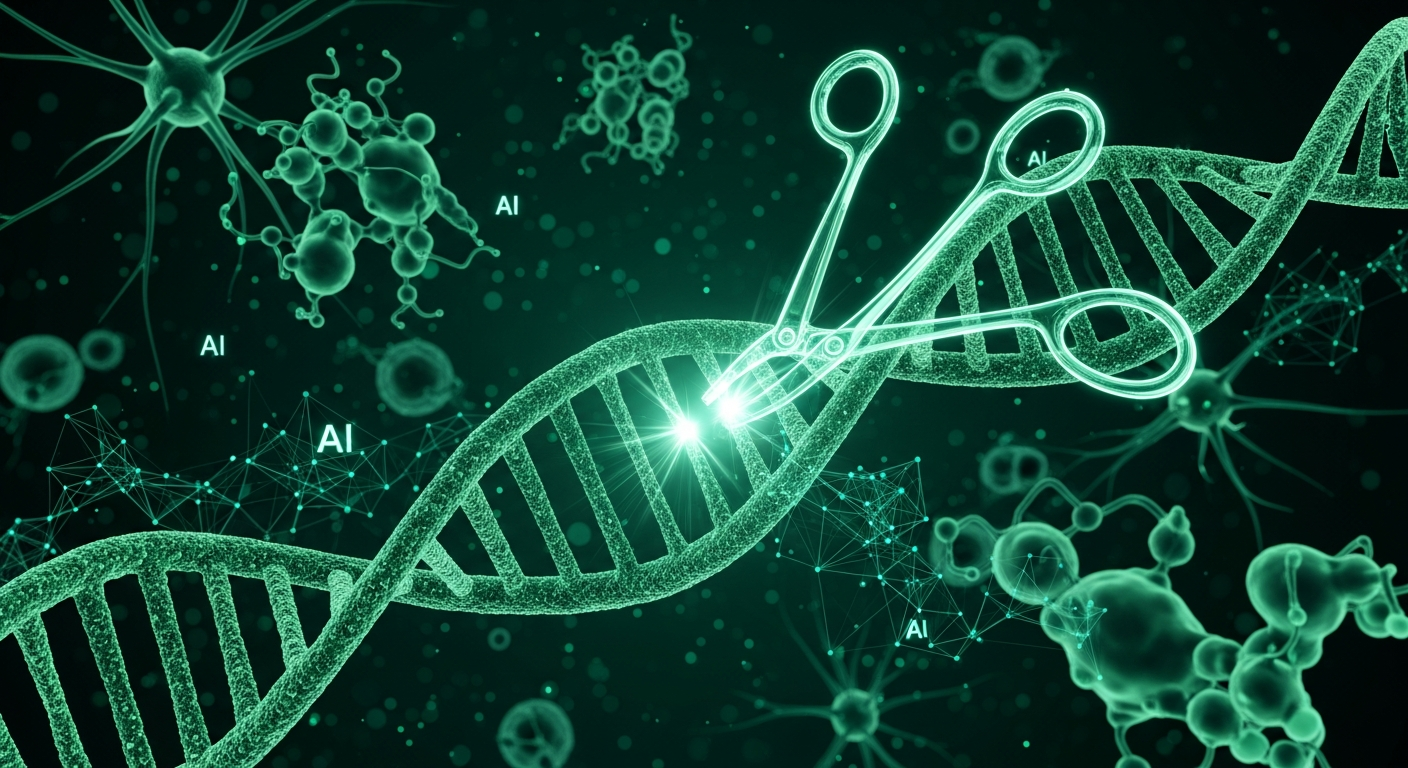
The flagship technology of modern biotech is CRISPR gene editing. It works like molecular scissors: an enzyme (commonly Cas9) guided by a piece of RNA locates a precise spot in an organism's DNA and cuts it, allowing scientists to add, remove, or change genetic information with unprecedented accuracy. Cheaper, faster, and far more precise than older methods, CRISPR democratized gene editing and earned its pioneers a Nobel Prize.
Its impact is now clinical reality. Casgevy, developed by Vertex Pharmaceuticals and CRISPR Therapeutics, became the first approved CRISPR-based therapy, treating sickle cell disease — a watershed for the field. In 2025, doctors treated the world's first patient with a personalized CRISPR therapy, custom-designed for one baby's unique mutation. And newer refinements — base editing and prime editing — enable even more precise changes with fewer unintended off-target effects, making gene editing safer and opening doors to a wider range of conditions. CRISPR is also transforming agriculture and basic research, accelerating understanding of disease and enabling new generations of diagnostic tools.
Synthetic Biology: Programming Life
If gene editing rewrites existing DNA, synthetic biology goes further — designing and building new biological parts, systems, and even organisms from the ground up. Often described as "programming cells," it treats DNA like code, using gene synthesis to construct custom sequences and engineering cells to perform new functions. The most powerful application is biomanufacturing: turning engineered cells into living factories that produce pharmaceuticals, chemicals, food ingredients, and sustainable materials with far lower environmental footprint than conventional chemistry. Insulin, many cancer drugs, and a growing list of materials are already manufactured this way. The ambition is to make biology a general manufacturing platform — and with costs falling and tools improving, that vision is becoming economically real.
How AI Is Transforming Biotech
Artificial intelligence has become biotech's great accelerant, and the two fields are deeply intertwined. AI is transforming several areas at once:
- Drug discovery — AI analyzes molecular interactions and predicts drug candidates, compressing timelines. Tools that predict protein structures (like AlphaFold) have revolutionized research.
- CRISPR design — AI designs highly specific guide RNAs and predicts off-target effects, making gene editing safer and more precise, and helping personalize therapies to individual genomes.
- Bioinformatics — machine learning parses massive datasets of genetic sequences, protein structures, and metabolic pathways, extracting insights humans couldn't find manually.
- Lab automation — robotic systems now run hundreds of experiments simultaneously with AI-driven optimization and quality control, dramatically increasing throughput.
This fusion has made biotech one of the most compute-intensive industries of the decade — so much so that even quantum computing is being explored for complex molecular simulation. AI is shifting biology from slow trial-and-error toward rapid, data-driven design.
Precision Medicine and Cell & Gene Therapy
Biotech is driving a shift toward precision (personalized) medicine — tailoring treatment to an individual's genetic makeup rather than a one-size-fits-all approach. Powered by cheap genome sequencing and AI analysis, this enables matching patients to the therapies most likely to work for them. Closely related are the revolutionary cell and gene therapies: gene therapy corrects faulty genes at the source, while cell therapies like CAR-T re-engineer a patient's own immune cells to hunt and destroy cancers. These approaches have already produced remarkable results in blood cancers and genetic diseases — and the pipeline of candidates targeting solid tumors, rare diseases, and inherited conditions is expanding rapidly. The challenge now is scale and cost: making these transformative treatments accessible and affordable beyond specialist centers.
The Market and Investment
Biotechnology is a large and fast-growing sector attracting substantial investment. The gene-editing and genome-editing markets are each projected to grow at double-digit annual rates into the tens of billions of dollars over the next decade, while precision medicine is heading toward the hundreds of billions and bioinformatics is expanding rapidly. Venture capital continues to flow into biotech across hundreds of deals annually, with particular enthusiasm for AI-driven drug discovery, cell and gene therapy platforms, and synthetic biology. The sector spans everything from large pharma integrating biotech capabilities to a vibrant ecosystem of startups, university spinouts, and specialist CROs — making it one of the most dynamic investment landscapes of the era.
The Challenges: Ethics, Safety, and Access
Biotechnology's power brings profound challenges that the field must navigate carefully. Ethics loom largest, especially around editing human embryos (heritable "germline" changes) — the specter of "designer babies" raises deep questions about consent, equity, and where to draw lines, and there's genuine, unresolved societal debate about how far gene editing should go. Safety concerns include off-target genetic effects from CRISPR edits and the ecological risks of technologies like gene drives, which could spread engineered traits through entire wild populations. Access and equity are pressing: with some cell and gene therapies costing over a million dollars, the benefits of biotech risk being concentrated among the wealthy. Regulation is complex and inconsistent across jurisdictions, creating challenges for both innovators and patients. And biosecurity — the risk that powerful biological tools could be misused — is a growing concern for governments and the scientific community alike. These are not abstract problems; they require careful, inclusive governance that keeps pace with the technology.
The Future
Biotechnology's trajectory points toward accelerating capability and expanding impact. Expect gene editing to become a mainstream therapeutic platform for genetic diseases and cancers, synthetic biology to scale into a major manufacturing force for medicines and sustainable materials, and AI to deepen its role in designing biology from scratch. Precision medicine will move closer to standard care as sequencing costs continue to fall and AI interpretation improves. Applications will spread across agriculture (climate-resilient and more nutritious crops), industry (sustainable bio-based production replacing petrochemicals), and the environment (bioremediation and conservation). The convergence of biology, computing, and automation is compressing the timeline from discovery to application — what once took decades may take years. The field that once focused on reading life's code is now rewriting and redesigning it, and the pace will only quicken.
Conclusion
Biotechnology has become one of the defining technologies of our era — using and now actively engineering living systems to transform medicine, agriculture, and industry. Led by CRISPR gene editing (already curing diseases once thought untreatable), powered by synthetic biology's programmable cells, and supercharged by artificial intelligence, the field has moved from reading life's code to rewriting and redesigning it.
The promise is immense: cures for genetic diseases, personalized medicine, sustainable manufacturing, and resilient food systems. But so are the responsibilities — around ethics, safety, access, and security — that demand careful, thoughtful governance. Understanding biotechnology reveals a frontier where biology and technology merge, reshaping not just what we can build, but life itself. As always, this is general information, not medical advice — consult qualified professionals for any health decisions.
Want more? Explore AxionSquare for ongoing coverage of biotechnology, AI in healthcare, and the technologies reshaping our world.
Frequently Asked Questions
What is biotechnology?
Biotechnology is the use of living organisms, cells, and biological systems — or their molecular components — to develop products and technologies. It spans medicine (gene and cell therapies, drugs, diagnostics), agriculture (improved crops), and industry (enzymes, biofuels, materials). Modern biotech is a precise engineering discipline increasingly powered by the ability to read, edit, and design DNA.
What is CRISPR gene editing?
CRISPR is a gene-editing technology that works like molecular scissors: an enzyme (commonly Cas9) guided by RNA locates a precise spot in DNA and cuts it, letting scientists add, remove, or change genetic information with high accuracy. Cheaper and more precise than older methods, it has already produced approved therapies like Casgevy for sickle cell disease.
What is synthetic biology?
Synthetic biology involves designing and building new biological parts, systems, and organisms from the ground up — often described as "programming cells." It uses gene synthesis to construct custom DNA and engineers cells to perform new functions, with biomanufacturing (using engineered cells as living factories) as a major application for producing drugs, chemicals, and materials.
How is AI used in biotechnology?
AI accelerates biotech across drug discovery (analyzing molecules and predicting candidates, and protein structures via tools like AlphaFold), CRISPR design (creating precise guide RNAs and predicting off-target effects), bioinformatics (analyzing massive genetic datasets), and lab automation (running hundreds of experiments simultaneously). This has made biotech one of the most compute-intensive industries of the decade.
What are the main ethical concerns in biotechnology?
Key concerns include editing human embryos (heritable changes and "designer babies"), safety risks like off-target effects and gene drives that could disrupt ecosystems, high treatment costs raising access and equity issues, complex regulation, and biosecurity risks of misuse. These are subjects of genuine, unresolved societal debate requiring careful governance.
Sources and further reading
- FDA - Cell and Gene Therapy Products — Regulatory status and framework for CRISPR and gene therapy