Global Electric Vehicle Market Trends and Adoption Dynamics
A data-driven analysis of regional adoption speeds, battery technology cost efficiencies, and current trends in the global EV market.
Transportation · Global · 2026-06-09 · 10 min read · By John Awab
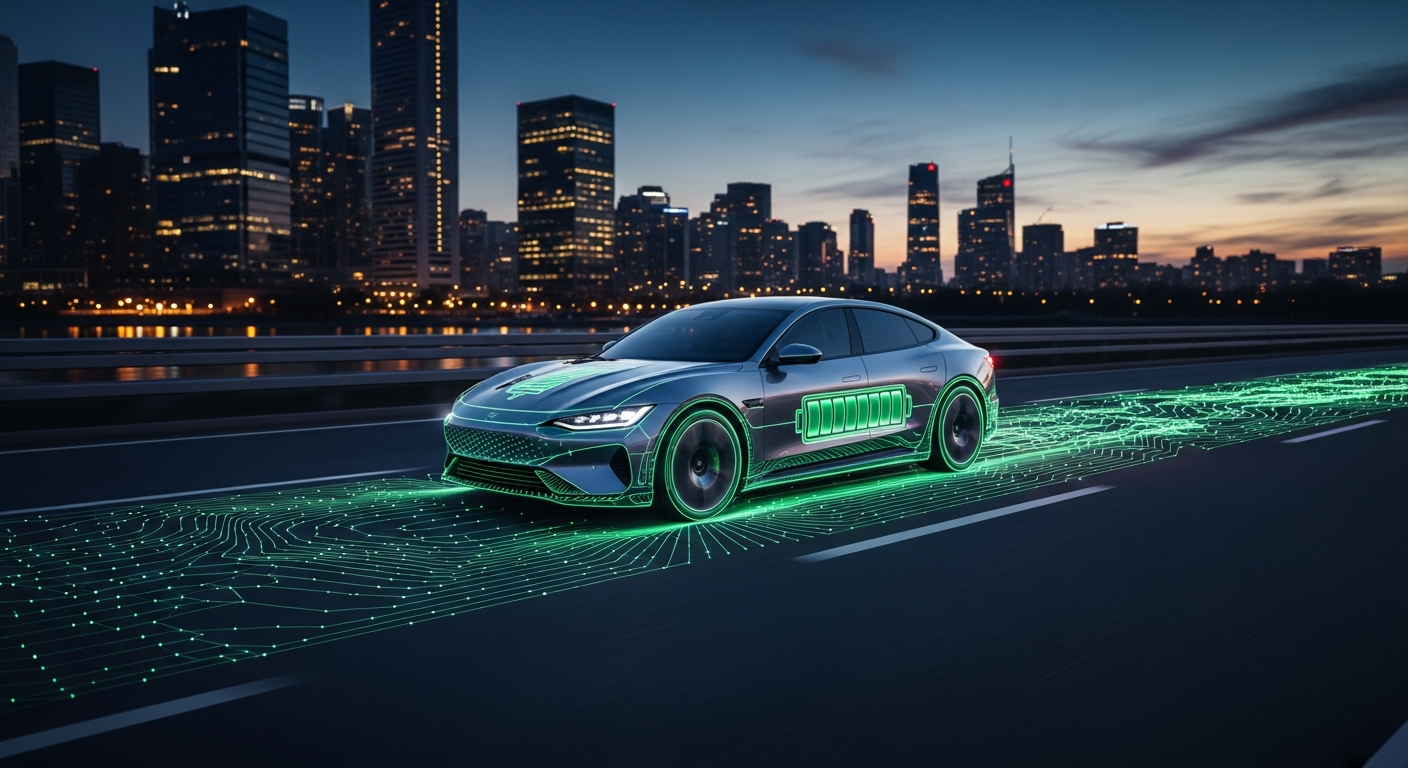
Electric vehicles crossed a milestone that once felt distant: in 2025, more than 20 million were sold worldwide, roughly one in four new cars on the planet. Yet the headline number hides a more interesting story — a global market splitting into very different regional speeds, batteries getting dramatically cheaper, and ranges climbing while one major market went into reverse. Understanding EVs in 2026 means looking past the noise to what the data actually shows.
This guide explains what electric vehicles are, how they work, where the market stands, and the real state of batteries, charging, and costs. Whether you are considering a purchase or tracking the industry, here is the clear picture.
What Are Electric Vehicles?
An electric vehicle is a car powered, fully or partly, by electricity stored in a battery rather than by burning fuel in an engine. There are three main types worth distinguishing:
- Battery electric vehicles (BEVs) run entirely on electricity, with no gas engine at all. These are what most people mean by "EV," and they made up about 65% of electric car sales in 2025.
- Plug-in hybrid electric vehicles (PHEVs) combine a battery and electric motor with a gasoline engine, offering electric-only range for short trips and fuel for longer ones.
- Hybrids (HEVs) use a small battery to assist a gas engine but cannot be plugged in; they are often grouped with "electrified" vehicles but are not true EVs.
Knowing which type a statistic refers to matters — mixing BEV-only and BEV-plus-PHEV figures is the most common source of confusion in EV headlines.
How Electric Vehicles Work
A BEV is mechanically far simpler than a gas car. A large lithium-ion battery pack stores energy and feeds it to one or more electric motors that drive the wheels. There is no multi-gear transmission, no exhaust, and far fewer moving parts, which is why EVs need less maintenance.
Two features define the experience. Instant torque means an electric motor delivers full power immediately, giving brisk, smooth acceleration. Regenerative braking captures energy normally lost when slowing down and feeds it back into the battery, extending range and reducing brake wear. Drivers recharge by plugging into home chargers or public stations, with charging speed depending on the charger type and the car's capabilities.
The State of the EV Market in 2026
Globally, momentum is intact. Electric car sales crossed 20 million in 2025 and the International Energy Agency expects around 23 million in 2026 — close to 30% of every car sold worldwide. Roughly 40 countries now have EV sales shares of at least 10%, and about 5% of the world's entire car stock is now electric, displacing an estimated 1.2 million barrels of oil per day.
But the global line is no longer simply going up and to the right. Some forecasters note growth is slowing as incentives decline, projecting a more modest rise to around 22–23 million in 2026. The single most important trend in 2026 is divergence: the world average hides three very different markets.
A Tale of Three Markets
China leads decisively, heading toward a 60% domestic share of new-car sales. Its manufacturer BYD overtook Tesla in global battery-electric volume, selling millions of new-energy vehicles and exporting millions more, reshaping the competitive landscape worldwide.
Europe overtook China as the fastest-growing major market in 2025, driven by regulation. EU battery-electric share rose to roughly 17%, and the UK became Europe's second-largest EV market by volume, registering well over 470,000 new BEVs for a market share above 23%.
The United States went into reverse. Federal EV tax credits expired at the end of September 2025, pulling a year's worth of demand into a single quarter — a record Q3 followed by a sharp drop, with Q4 share falling to under 6%. The US plug-in market declined about 4% in 2025, its first battery-electric decline in a decade. Tesla, despite an overall delivery dip, climbed to a dominant share of the shrinking US EV market.
The lesson: EV adoption is now shaped as much by policy and affordability as by technology.
Battery Technology and Falling Costs
The quiet revolution is in batteries. Lithium-ion battery pack prices hit a record low of around $108 per kWh in 2025 — down about 8% in a year and roughly 93% below 2010 levels — with battery-electric packs even cheaper at around $99 per kWh. Cheaper batteries mean cheaper EVs, and they are the main reason price parity with gas cars keeps getting closer.
Technology is advancing too. Lower-cost LFP (lithium iron phosphate) chemistries are widespread, and solid-state batteries — promising more range and faster charging — are on the horizon. One notable geographic wrinkle: battery costs vary by region, with North American and European buyers paying meaningfully more per pack than Chinese buyers.
Range, Charging, and the 2026 Reality
The on-the-road experience has improved more than sales charts suggest. Real-world range climbed about 11% year over year, with the average 2026 model delivering around 325 miles. The fastest-charging EVs can now add 100 miles in under 10 minutes. And durability fears are easing: the average EV retains about 97% of its range after three years.
Charging infrastructure is scaling rapidly, with well over a million public charging devices added globally in a single year, though availability still varies widely by region and remains a real barrier in some markets. The shift toward common charging standards is making public charging simpler.
Benefits and Challenges of EVs
The advantages are substantial: lower running and maintenance costs, instant performance, quiet operation, and lower tailpipe emissions. Over a vehicle's life, EVs generally produce fewer emissions than comparable gas cars even accounting for electricity generation and battery production.
The challenges are real too: higher upfront prices (though narrowing), charging access that depends heavily on where you live, longer "refueling" times than a gas stop, and range that drops in cold weather. Policy volatility — as the US tax-credit episode showed — adds uncertainty for buyers and automakers alike.
New EVs to Watch in 2026
Fresh models are injecting energy into the market, including the more affordable Rivian R2, the competitively priced Volvo EX30 compact crossover, and BMW's next-generation electric lineup. Lower price points are widely seen as the key to the next wave of adoption, especially as incentives fade.
The Future of Electric Vehicles
The long-term direction remains electric, even if the path is bumpier than the early hype suggested. Global EV share is broadly projected to keep climbing toward and past 50% in the decades ahead, propelled by falling battery costs, better range, expanding charging, and tightening emissions rules in many regions. Expect more affordable models, software-defined vehicles with over-the-air updates, and growing links between EVs and the power grid through vehicle-to-grid technology. Regional divergence, however, will likely persist.
Conclusion
Electric vehicles in 2026 are no longer a niche — they are a quarter of the global new-car market and climbing, with batteries cheaper than ever and ranges that put most anxiety to rest. But the story is genuinely regional: China races ahead, Europe grows through regulation, and the US stumbles on shifting policy.
For buyers, the fundamentals have never looked better: lower running costs, longer range, and a widening choice of models. For the industry, success now hinges on affordability and infrastructure as much as engineering. Watch the battery prices and the regional data, and you will see where this transition is really heading.
Want more? Explore AxionSquare for ongoing coverage of electric vehicles, transportation tech, and the innovations reshaping how we move.
Frequently Asked Questions
What is an electric vehicle?
An electric vehicle is a car powered fully or partly by electricity stored in a battery rather than by burning fuel. Battery electric vehicles (BEVs) run only on electricity, while plug-in hybrids combine a battery with a gas engine.
How far can an electric car go on a charge?
Range varies by model, but the average 2026 EV delivers around 325 miles of real-world range, up about 11% year over year. Range drops somewhat in cold weather and at high speeds.
Are electric cars cheaper to own than gas cars?
EVs typically have lower running and maintenance costs thanks to cheaper "fuel" and fewer moving parts, though upfront prices can be higher. Falling battery costs are steadily narrowing the purchase-price gap.
How long do EV batteries last?
Modern EV batteries are durable — the average EV retains about 97% of its range after three years. Most last well over a decade, and battery prices have fallen roughly 93% since 2010.
Why are US EV sales falling while global sales rise?
US federal EV tax credits expired at the end of September 2025, causing buyers to rush purchases beforehand and sales to drop afterward. Meanwhile China and Europe kept growing, creating a sharp regional divergence.
Sources and further reading
- International Energy Agency (IEA) Global EV Outlook — Global sales, stock metrics, and regional market trends