EV Battery Evolution: Solid-State and Industrial Chemistry Advancements
Technological shifts toward solid-state and sodium-ion chemistries are enabling significant improvements in safety, charging speed, and economic reliability for electric vehicle batteries.
Transportation · Global · 2026-06-13 · 11 min read · By John Awab
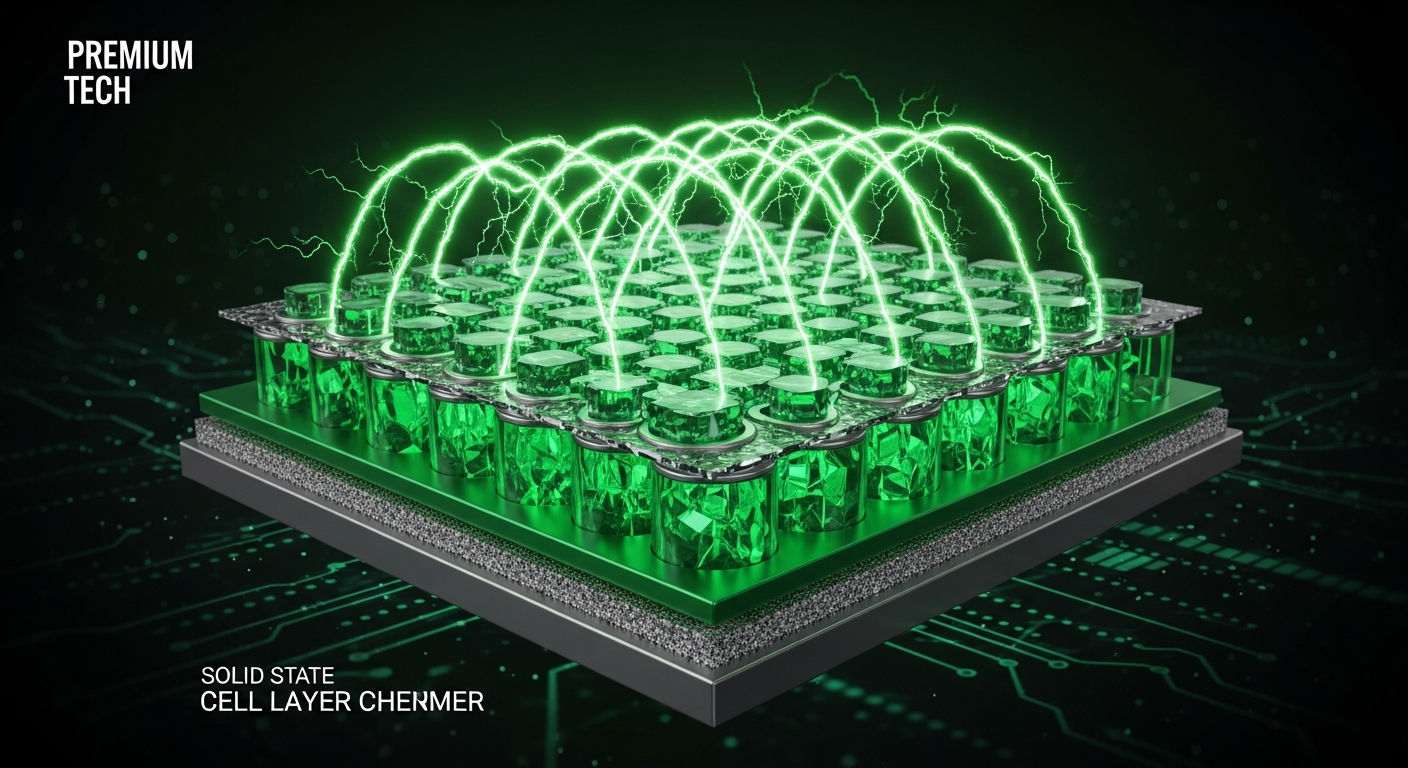
In August 2025, a Mercedes-Benz EQS drove 1,205 kilometers — from Stuttgart to Malmö, across three countries on ordinary highways — on a single charge, using a new generation of solid-state battery. That feat hints at where EV battery technology is heading: dramatically more range, faster charging, and better safety. But the real 2026 story is quieter and arguably more important: the steady industrialization of cheaper, safer batteries that make electric vehicles boringly reliable.
This guide explains how EV batteries work, the metrics that matter, the competing chemistries, the breakthroughs reshaping the field in 2026, and the challenges around longevity, recycling, and supply. Whether you're an EV owner, a prospective buyer, or just curious, here is the clear picture. (Figures vary by source and product, so treat them as estimates.)
What Is an EV Battery and How Does It Work?
An EV battery is a large pack of rechargeable cells that stores the electrical energy powering an electric vehicle's motor. Almost all are some form of lithium-ion battery, the same basic technology in your phone, scaled up enormously.
Each cell has four key parts: an anode (negative electrode), a cathode (positive electrode), an electrolyte (the medium ions move through), and a separator. When the battery discharges, lithium ions flow from anode to cathode through the electrolyte, releasing energy to drive the motor; charging reverses the flow. Thousands of cells are bundled into modules and packs, managed by a battery management system that balances performance, safety, and longevity.
The Metrics That Matter
A handful of numbers define a battery's quality:
- Energy density (Wh/kg) — how much energy is stored per kilogram. Higher density means more range without more weight. Today's best lithium-ion cells deliver roughly 200–300 Wh/kg.
- Cost ($/kWh) — the price per unit of energy storage; falling cost is the single biggest driver of EV affordability.
- Cycle life and degradation — how many charge cycles the battery lasts and how gracefully its capacity fades.
- Charging speed — how fast it can safely refill.
- Safety — resistance to overheating or fire.
Every chemistry trades these against one another; there's no single "best" battery, only the best fit for a purpose.
The Main Battery Chemistries
Several chemistries compete in 2026:
- NMC (nickel manganese cobalt) — high energy density for long range, but more expensive and reliant on costly nickel and cobalt.
- LFP (lithium iron phosphate) — cheaper, safer, and longer-lasting with flatter degradation, though lower energy density. It has become dominant for mainstream EVs.
- LMFP (adds manganese to LFP) — pushes LFP-class safety and cost toward higher energy density (roughly 190–210 Wh/kg at the pack level in early deployments).
- Sodium-ion — uses abundant sodium instead of lithium, cobalt, and nickel; cheaper and better in cold, though lower energy density.
- Solid-state — replaces the liquid electrolyte with a solid one, promising much higher energy density and better safety; the most anticipated next step.
The State of EV Batteries in 2026
The defining theme is steady, multi-front progress rather than one miracle battery. Mainstream lithium-ion keeps getting cheaper and tougher as LFP and LMFP take over, giving newer EVs 300–400 miles of usable range with packs that aren't enormous, while charging faster than early EVs ever could. As these chemistries spread, degradation profiles are flatter and more predictable — good news especially for used-EV buyers, who are less likely to inherit serious battery anxiety. Meanwhile, prices keep falling, edging EVs closer to sticker-price parity with combustion vehicles in more segments.
The Solid-State Race
Solid-state batteries (SSBs) are the headline technology of the decade. By swapping the flammable liquid electrolyte for a solid one (glass, ceramic, or polymer) and pairing it with a lithium-metal anode, they promise 50–80% more energy in the same space, intrinsic safety, and faster charging — potentially enabling 1,000+ km range. Commercial targets sit around 400–500 Wh/kg, with longer-term ambitions toward 600.
The 2026 momentum is real. A GAC-backed maker rolled out its first all-solid-state A-sample cells at 260–500 Wh/kg that survived nail-penetration and thermal-shock tests, targeting large-scale production. Mercedes's partner achieved the 1,205-km drive on lithium-metal solid-state cells holding about 25% more usable energy. Nearly every major automaker — Toyota, CATL, BYD, Volkswagen's partner QuantumScape, Mercedes, Stellantis with Factorial, and others — is racing toward production-ready cells.
The crucial caveat: solid-state has been "almost here" before (Toyota once aimed for 2020 and has slipped repeatedly, now targeting 2027–2028), and real hurdles remain — high cost, dendrite formation, electrode-interface issues, and the challenge of mass manufacturing. The realistic picture is a phased rollout: semi-solid cells in some cars now, with fully solid-state EVs scaling through the late 2020s into the early 2030s.
Sodium-Ion: The Affordable Challenger
While solid-state chases performance, sodium-ion chases affordability. Built on abundant sodium rather than scarce lithium, cobalt, and nickel, it's cheaper and performs better in cold (some packs operate from −40°C to +70°C). The world's largest battery maker unveiled the first mass-production passenger EV running a sodium-ion pack in early 2026, with leading cells around 175 Wh/kg (close to LFP) and a roadmap toward LFP-level density and roughly 600 km of range, with costs anticipated to fall below LFP. Sodium-ion is unlikely to displace lithium altogether, but it is carving out a real role in affordable, cold-climate EVs.
Charging Speed and Battery Longevity
Two practical concerns dominate buyer questions. On charging, new chemistries and pack designs keep cutting times — some ultra-fast cells already recharge from near-empty to 80% in under ten minutes, and megawatt-level charging is emerging. On longevity, modern LFP and LMFP packs degrade more slowly and predictably than early EV batteries, and most come with long warranties; good habits (avoiding constant 100% charges and extreme heat) extend life further. The upshot: range anxiety, once a top concern for EV buyers, is steadily receding.
Recycling and the Supply Chain
As millions of EV batteries reach end of life, recycling and supply security matter more. Batteries can be given a "second life" in stationary energy storage before being recycled to recover lithium, nickel, cobalt, and other materials. Reducing reliance on scarce, geographically concentrated minerals — a key appeal of LFP and sodium-ion, which use cheaper, more abundant inputs — is now a strategic priority for automakers and governments alike, tying battery technology to broader energy-security strategy.
The Future
Expect continued, compounding gains: cheaper LFP and sodium-ion for affordability, solid-state scaling for premium range and safety, faster charging, smarter battery management, and bidirectional charging that turns an EV's pack into a home and grid energy asset. No single battery will "win"; instead, a diverse toolkit of chemistries will serve different needs. The direction is clear — EV batteries are getting cheaper, safer, longer-lasting, and faster to charge, steadily dismantling the last barriers to mass EV adoption.
Conclusion
EV battery technology in 2026 is advancing on every front at once: dominant LFP and LMFP chemistries are driving down cost and boosting reliability, sodium-ion is arriving to make EVs more affordable, and solid-state is moving from lab to road with the promise of longer range and greater safety. Understanding energy density, cost, longevity, and the competing chemistries is key to grasping where electric mobility is headed.
The era of waiting for one breakthrough battery is over. What's happening instead — steady, broad industrialization — is exactly what turns EVs into mainstream, dependable appliances. As batteries keep getting better and cheaper, the electric future looks less like a leap and more like an inevitability.
Want more? Explore AxionSquare for ongoing coverage of EV batteries, electric vehicles, and the future of transportation.
Frequently Asked Questions
How do EV batteries work?
An EV battery stores energy in lithium-ion cells, each with an anode, cathode, electrolyte, and separator. Discharging moves lithium ions from anode to cathode to power the motor, and charging reverses the flow. Thousands of cells form a pack managed by a battery management system.
What is a solid-state battery?
A solid-state battery replaces the liquid electrolyte in a normal lithium-ion cell with a solid one and often uses a lithium-metal anode. This promises 50–80% more energy density, better safety (no flammable liquid), and faster charging, potentially enabling 1,000+ km range.
When will solid-state batteries be in EVs?
Semi-solid cells are already in some vehicles, and major automakers are targeting production of fully solid-state cells in the late 2020s, with broader rollout into the early 2030s. Timelines have slipped before, so a phased transition is most likely.
What is the difference between LFP and sodium-ion batteries?
LFP (lithium iron phosphate) uses lithium and is cheaper, safer, and longer-lasting than nickel-based cells. Sodium-ion replaces lithium with abundant sodium, making it even cheaper and better in cold, though with somewhat lower energy density today.
How long do EV batteries last?
Modern EV batteries, especially LFP and LMFP, degrade slowly and predictably, often retaining most capacity well beyond typical warranty periods. Avoiding constant full charges and extreme heat helps extend their life further.
Sources and further reading
- U.S. Department of Energy - Battery Research — Technical evolution of battery chemistries.
- Argonne National Laboratory - Battery Materials — Research on solid-state and energy density metrics.