The Economics of Transportation: Total Cost of Ownership for EVs vs. Internal Combustion
Total cost of ownership analysis reveals that electric vehicle savings are highly dependent on specific usage patterns, infrastructure access, and long-term maintenance variables.
Transportation · Global · 2026-06-14 · 9 min read · By John Awab
Ask whether an electric car is "cheaper" than a gas car and the honest answer is: it depends — and the gap can swing more than $10,000 in either direction. The right EV owner, driving plenty of miles and charging at home, can save thousands over five years. The wrong-fit buyer, driving little and relying on public fast charging, can actually pay thousands more. The sticker price tells you almost nothing; the total cost of ownership tells you everything.
This guide breaks down the real EV-versus-gas cost comparison for 2026 — every cost component, the break-even math, and exactly which kind of driver comes out ahead. (Costs vary widely by location, vehicle, and habits; this is general information, not financial advice — run your own numbers before deciding.)
Sticker Price vs Total Cost of Ownership
The single most important concept here is total cost of ownership (TCO) — the full cost of buying and running a car over the years you keep it, not just the price on the window. Electric cars typically cost more upfront but less to operate, so the comparison is really a race: do an EV's running-cost savings catch up to its higher purchase price before you sell it? Whether they do depends on how, how much, and how long you drive.
The Cost Components Compared
Purchase Price
Gas wins here. A new EV typically costs roughly $5,000–$15,000 more than a comparable gas model, though the gap is narrowing and the used-EV market has become notably cheaper. This upfront premium is the deficit an EV's lower running costs must overcome.
Fuel vs Electricity
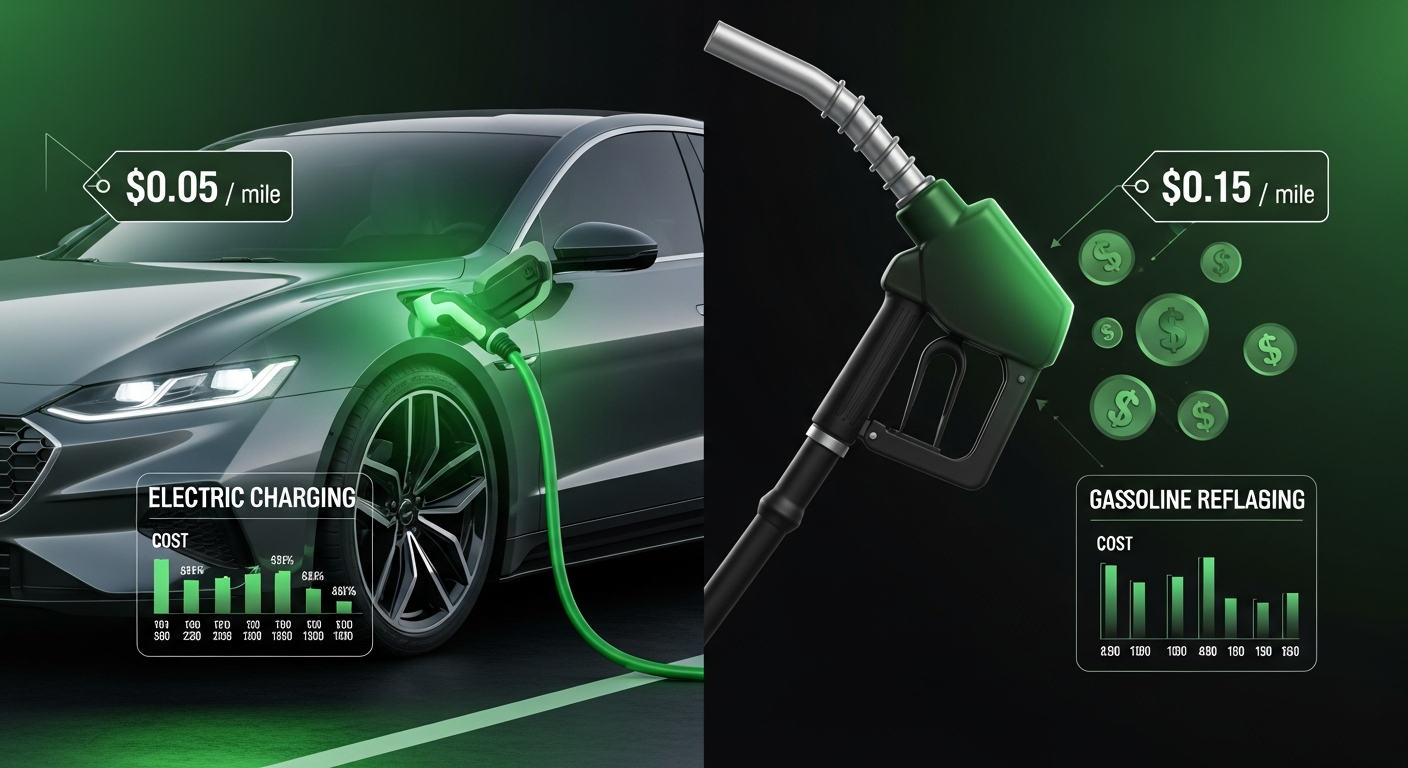
The EV's biggest advantage. Electricity is generally far cheaper per mile than gasoline, and EVs commonly cost 10–15 cents less per mile to run than a comparable gas car when fuel and maintenance are combined. Home charging is cheapest; public DC fast charging costs more and can erode the advantage. A second, underrated benefit: electricity prices are far more stable than gas, which swings with global oil markets — so an EV makes your fuel budget predictable, and EV savings tend to grow when gas prices spike.
Maintenance
EVs win again. With no oil changes, far fewer moving parts, and regenerative braking that extends brake life, EVs typically save roughly $600–$1,200 per year in maintenance versus a gas car.
Insurance
Gas usually wins. EVs often cost more to insure, due to higher repair costs and pricier parts — a real expense that partly offsets the fuel and maintenance savings.
Depreciation
Historically a weak spot for EVs, though the picture is shifting. Depreciation varies enormously by model; some EVs have held value poorly while others now hold up well, and the maturing used market is improving the outlook. It's worth checking resale data for the specific model you're considering.
Battery Replacement
The big worry — often overblown. Most EV batteries are warrantied for around 8 years or 100,000 miles, and they typically retain 70–85% of capacity after 8–10 years, with many owners reporting minimal degradation past 100,000 miles. Out-of-warranty replacement can cost $8,000–$15,000+, but for most owners it's a cost they'll never actually incur during the car's useful life.
The Incentive Reality in 2026
This is where many online calculators are out of date. The federal EV tax credit (Section 30D, up to $7,500 for new EVs and up to $4,000 for used) expired on September 30, 2025 and is not available for 2026 vehicle purchases. If you bought a qualifying EV before that date, you may still claim it on your 2025 return — but for a 2026 purchase, don't count on the federal credit. The good news: many state and local incentives remain active, so check your state's energy office or database for what's currently available in your area.
When Does an EV Break Even?
For a typical buyer, an EV's running-cost savings catch up to its higher purchase price in roughly 3 to 7 years, or about 50,000–70,000 miles, depending on local fuel and electricity prices, mileage, and charging access. Over a 5-year horizon the math is close and depends heavily on your profile; over 10 years the fuel and maintenance savings compound and the EV's advantage grows substantially. Without the now-expired federal credit, break-even has lengthened compared to recent years — making mileage and home-charging access more important than ever.
Who Saves With an EV — and Who Doesn't
The honest 2026 verdict is that your personal profile determines the outcome:
The EV wins when you drive 12,000+ miles per year, have home (or cheap workplace) charging, keep the car 5+ years, and live somewhere with high gas prices and reasonable electricity rates. In this profile, an EV can save thousands over five years and substantially more over a decade.
The gas car wins when you drive fewer than ~10,000 miles a year, lack home charging and rely on public fast charging, plan to sell within a few years, or buy a model with steep depreciation. In this profile, the gas car's lower sticker price and insurance can leave you thousands ahead.
Identifying which profile matches your life is the most important step before buying — far more important than any headline savings figure.
How to Figure Out Your Own Cost
To estimate your real comparison, gather a few inputs: your annual mileage, your local electricity rate (and whether you can charge at home, ideally on an off-peak rate) versus local gas prices, the purchase-price difference between the EV and gas models you're weighing, and how long you plan to keep the car. Plug these into any reputable 2026 EV-vs-gas calculator (one that does not assume the expired federal credit), and you'll get a realistic break-even estimate for your situation.
The Bottom Line
EV versus gas car cost in 2026 isn't a one-size answer — it's a calculation. EVs almost always cost more to buy but less to fuel and maintain, with more predictable energy costs; gas cars win on sticker price, insurance, and short-term ownership. The federal $7,500 credit is gone for 2026 purchases, which lengthens the break-even, though state incentives may still help.
The deciding factors are mileage, home-charging access, and how long you'll keep the car. High-mileage drivers with home charging who hold their cars for years tend to come out clearly ahead with an EV; low-mileage, public-charging-dependent, short-term owners often don't. Run your own numbers with current prices and incentives, and you'll know which side of the $10,000 swing you're on. As always, this is general information, not financial advice.
Want more? Explore AxionSquare for ongoing coverage of electric vehicles, charging, batteries, and the future of transportation.
Frequently Asked Questions
Are electric cars cheaper than gas cars?
It depends on your situation. EVs cost more to buy but less to fuel and maintain, often saving 10–15 cents per mile to operate. Over the long term, high-mileage drivers with home charging usually save, while low-mileage or public-charging-only drivers may not.
When does an EV break even versus a gas car?
For a typical buyer, an EV's running-cost savings offset its higher purchase price in roughly 3 to 7 years, or about 50,000–70,000 miles, depending on mileage, charging access, and local fuel and electricity prices.
Is there a federal EV tax credit in 2026?
No. The federal EV tax credit (up to $7,500 new, $4,000 used) expired on September 30, 2025 and is not available for 2026 purchases. Some state and local incentives remain, so check your state's energy office.
How much do EVs save on fuel and maintenance?
EV drivers commonly save over $1,000 per year combined — roughly $600–$1,200 in maintenance (no oil changes, longer brake life) plus significant fuel savings, since electricity is cheaper per mile and more price-stable than gasoline.
Will I have to replace the EV battery?
Probably not during normal ownership. Most EV batteries are warrantied for about 8 years or 100,000 miles and typically retain 70–85% of capacity after 8–10 years. Out-of-warranty replacement costs $8,000–$15,000+, but many owners never need it.
Sources and further reading
- International Energy Agency - Global EV Outlook — Market trends and cost comparative analysis data.