The State of Exoskeleton Technology: Industrial and Clinical Applications
An analysis of wearable robotics across medical, industrial, and military sectors, evaluating the shift from experimental prototypes to functional workforce augmentation.
Robotics · Global · 2026-07-18 · 7 min read · By John Awab
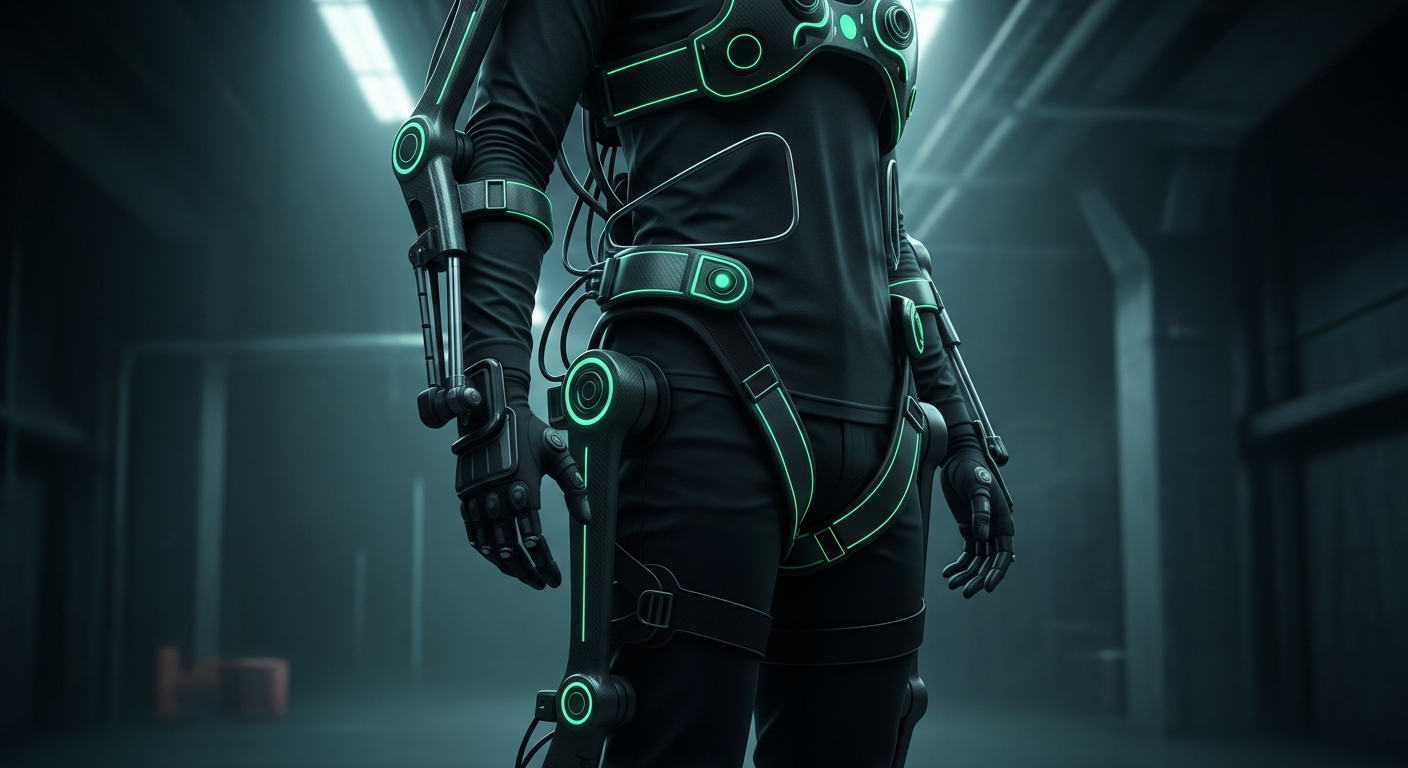
A warehouse worker lifts heavy boxes all day without back strain. A paralyzed patient stands and walks across a rehabilitation clinic. A soldier carries a punishing load across rough terrain without exhaustion. These aren't scenes from science fiction — they're happening now, powered by exoskeletons: wearable robotic devices that augment human strength, endurance, and mobility. Once confined to research labs and military dreams, exoskeletons have become a real, fast-growing technology sitting at the intersection of robotics and the human body. In 2026, they're helping injured people walk again, protecting workers from injury, and enhancing human physical capability in ways that blur the line between person and machine.
This guide explains what exoskeletons are, how they work, the powered-versus-passive distinction, the three major application areas, the key players, the market, and the challenges ahead. (Market figures vary enormously by source and scope, so treat them as estimates.)
What Is an Exoskeleton?
An exoskeleton is a wearable robotic device that a person straps onto their body to augment, assist, or restore physical movement and strength. Named after the hard external skeletons of insects and crustaceans, a robotic exoskeleton is essentially a mechanical framework worn over the limbs or torso, working in concert with the wearer's own movements. It can support a person's weight, amplify their strength, reduce fatigue, or enable movement that would otherwise be impossible.
At its core, an exoskeleton is human augmentation technology — a machine designed not to replace humans (like most robots) but to enhance them, merging human intelligence and adaptability with robotic strength and endurance.
How Exoskeletons Work
A powered exoskeleton combines several key components working together. Sensors detect the wearer's movements, posture, and intentions — reading muscle signals, joint angles, or force. A control system, increasingly powered by AI, interprets those signals and decides how and when to provide assistance. Actuators (electric motors or hydraulic systems) at the joints deliver the physical force, moving in sync with the wearer to amplify their motion. Power sources (batteries) energize the system, and a lightweight but strong structural frame (using advanced materials) transfers loads and holds everything together.
The magic is in the coordination: the exoskeleton must sense what the wearer wants to do and respond in real time, seamlessly. A major 2026 advance is the integration of AI and advanced sensors, allowing devices to adaptively adjust support based on the wearer's real-world motion rather than providing fixed assistance — dramatically improving comfort, safety, and effectiveness.
Powered vs Passive Exoskeletons
Exoskeletons split into two fundamental types. Powered (active) exoskeletons use motors, actuators, and batteries to actively generate force — they can lift loads, move paralyzed limbs, or add significant strength, but they're heavier, costlier, and need charging. Passive exoskeletons use no motors at all; instead they employ springs, elastic materials, and clever mechanical design to store and redirect energy, redistributing loads to reduce strain — lighter, cheaper, and maintenance-free, but with more modest assistance. In the US market, powered systems hold a majority preference for their greater capability, but passive designs are widely used in industry for their simplicity and affordability. The choice depends entirely on the application: restoring a paralyzed person's mobility requires powered assistance, while reducing a warehouse worker's fatigue may only need passive support.
Medical and Rehabilitation Exoskeletons
The most transformative application is in healthcare and rehabilitation, where exoskeletons help people with mobility impairments stand, walk, and recover. They serve patients recovering from strokes, spinal cord injuries, and other conditions — spinal cord injuries alone affect hundreds of thousands of people, with tens of thousands of new cases annually in the US, driving demand. Rehabilitation hospitals are adopting these devices rapidly, with a majority now integrating robotic exoskeletons into mobility therapy because they enable more intensive, repetitive practice and better outcomes than traditional methods.
A defining 2026 trend is the shift from bulky, stationary clinical devices to lightweight, portable models patients can use at home and in daily life. Advances in materials, batteries, and compact actuators are enabling home-based rehabilitation and everyday mobility, empowering users with real independence — some newer wearable suits are even designed to let individuals with complete paralysis stand and walk. This move from the clinic to daily living is expanding both the impact and the market dramatically.
Industrial Exoskeletons
The fastest-growing commercial application is in industry and logistics, where exoskeletons protect workers and boost productivity. In manufacturing, construction, warehousing, and retail, workers face musculoskeletal injuries from lifting heavy loads and performing repetitive tasks — a massive source of workplace injury and cost. Industrial exoskeletons assist with lifting, support the back and shoulders during overhead or repetitive work, and reduce fatigue, cutting injury risk while improving efficiency. A large share of manufacturing facilities deploying them report higher worker efficiency and reduced fatigue. This application is driven by workplace safety regulations, employer focus on ergonomics and worker well-being, and clear productivity gains. Notably, the trend is shifting from passive aids toward "active ergonomics" — AI-powered devices that adapt lift assistance in real time, some providing substantial lifting support that adjusts dynamically to the worker's movements.
Military and Defense Exoskeletons
The military and defense sector has long driven exoskeleton development, seeking to enhance soldiers' physical performance. Military exoskeletons aim to improve endurance, mobility, and load-carrying capacity, letting soldiers carry heavy equipment over long distances with less fatigue and reduced injury risk — some systems support load capacities well over 90 kg. Beyond frontline enhancement, they have applications in logistics and maintenance, helping personnel handle heavy materials. Rising defense budgets globally are a significant market driver, and military R&D continues to push exoskeletons toward being lighter, more robust, and adaptable to demanding field environments.
The Market and Key Players
The exoskeleton market is growing rapidly, though estimates vary enormously by how the category is defined — placing the market anywhere from under $1 billion to several billion dollars in 2026, with projected compound annual growth rates ranging widely (often cited between roughly 15% and 44%) and forecasts reaching into the tens of billions by the mid-2030s. What's consistent across sources is rapid growth. North America holds the largest share (driven by healthcare and defense investment), while Asia-Pacific is the fastest-growing region. Over 120,000 exoskeleton units are estimated to be deployed globally across sectors.
Key players include rehabilitation specialists like Ekso Bionics, ReWalk Robotics, Hocoma, and Cyberdyne, industrial-focused companies like German Bionic, SuitX, and Hyundai's robotics division, and major defense contractors like Lockheed Martin. The market sees heavy merger-and-acquisition activity as companies race to consolidate and access new robotic technologies. Aging populations worldwide — with hundreds of millions of people over 65, many needing mobility support — provide a powerful long-term demand driver across both medical and consumer applications.
The Challenges
Despite the promise, exoskeletons face real obstacles. Cost remains high, especially for powered medical and industrial systems, limiting adoption. Weight and battery life are persistent engineering challenges — devices need to be light enough for all-day comfort yet powerful enough to help, and around half of wearable-robotics R&D spending focuses squarely on improving battery efficiency and reducing device weight. Comfort and fit matter enormously, since an uncomfortable device won't be worn. Regulatory approval for medical devices is rigorous and slow. Reimbursement for medical exoskeletons is still evolving, affecting affordability for patients. And user training and acceptance take time. Overcoming the weight, battery, and cost hurdles — the central engineering focus of the field — is key to broader adoption.
The Future
Exoskeletons are on a clear path toward becoming lighter, smarter, cheaper, and more widespread. Expect deeper AI integration for seamless, adaptive assistance that anticipates the wearer's intent; continued advances in materials and batteries making devices more wearable; the ongoing shift of medical exoskeletons from clinics into homes and daily life; broadening industrial adoption as active ergonomics becomes standard; and expansion into new areas like elder care and even consumer fitness and mobility. As populations age and workplace-safety and rehabilitation demands grow, exoskeletons are poised to become a mainstream human-augmentation technology. The line between human and machine capability will keep blurring — not by replacing people, but by empowering them.
Conclusion
Exoskeletons are wearable robots that augment human strength, endurance, and mobility — restoring the ability to walk to the paralyzed, protecting workers from injury, and enhancing soldiers' capabilities. Built from sensors, AI control systems, actuators, and lightweight frames, and split between powerful active systems and simple passive designs, they represent one of robotics' most human-centered frontiers.
Across medical rehabilitation, industrial safety, and military enhancement, exoskeletons are seeing rapid, dual-use growth, propelled by aging populations, workplace-safety demands, defense investment, and AI advances. Real challenges around weight, battery life, cost, and regulation remain, but the trajectory is unmistakable. Understanding exoskeletons reveals a technology that doesn't seek to replace humans but to empower them — merging human and machine to expand what our bodies can do.
Want more? Explore AxionSquare for ongoing coverage of exoskeletons, robotics, physical AI, and the technologies augmenting human capability.
Frequently Asked Questions
What is an exoskeleton?
An exoskeleton is a wearable robotic device that a person straps onto their body to augment, assist, or restore physical movement and strength. Named after the external skeletons of insects, it's a mechanical framework worn over the limbs or torso that works with the wearer's movements to support weight, amplify strength, reduce fatigue, or enable otherwise impossible motion.
How do exoskeletons work? Powered exoskeletons combine sensors (detecting the wearer's movements and intentions), an AI-driven control system (deciding how to assist), actuators like motors at the joints (delivering force), batteries (for power), and a lightweight structural frame. The device senses what the wearer wants to do and responds in real time, increasingly using AI to adaptively adjust support.
What is the difference between powered and passive exoskeletons? Powered (active) exoskeletons use motors, actuators, and batteries to actively generate force — capable of lifting loads or moving paralyzed limbs, but heavier and costlier. Passive exoskeletons use springs and mechanical design (no motors) to redistribute loads and reduce strain — lighter, cheaper, and maintenance-free, but with more modest assistance. The right choice depends on the application.
What are exoskeletons used for? Three main areas: medical rehabilitation (helping people with strokes, spinal cord injuries, and mobility impairments walk and recover), industrial safety (protecting warehouse, manufacturing, and construction workers from lifting injuries while boosting productivity), and military/defense (enhancing soldiers' endurance and load-carrying capacity). Emerging uses include elder care and consumer mobility.
What are the main challenges facing exoskeletons? Key challenges include high cost (especially powered systems), weight and battery life (the central engineering focus, with about half of R&D spending targeting these), comfort and fit, rigorous and slow medical device regulation, evolving insurance reimbursement, and user training and acceptance. Overcoming weight, battery, and cost hurdles is key to broader adoption.