The Robotics Landscape: Industrial Scaling and Market Viability
An examination of the robotics market beyond viral consumer demos, focusing on industrial automation, capital deployment, and sector-wide growth metrics.
Robotics · Global · 2026-09-02 · 10 min read · By John Awab
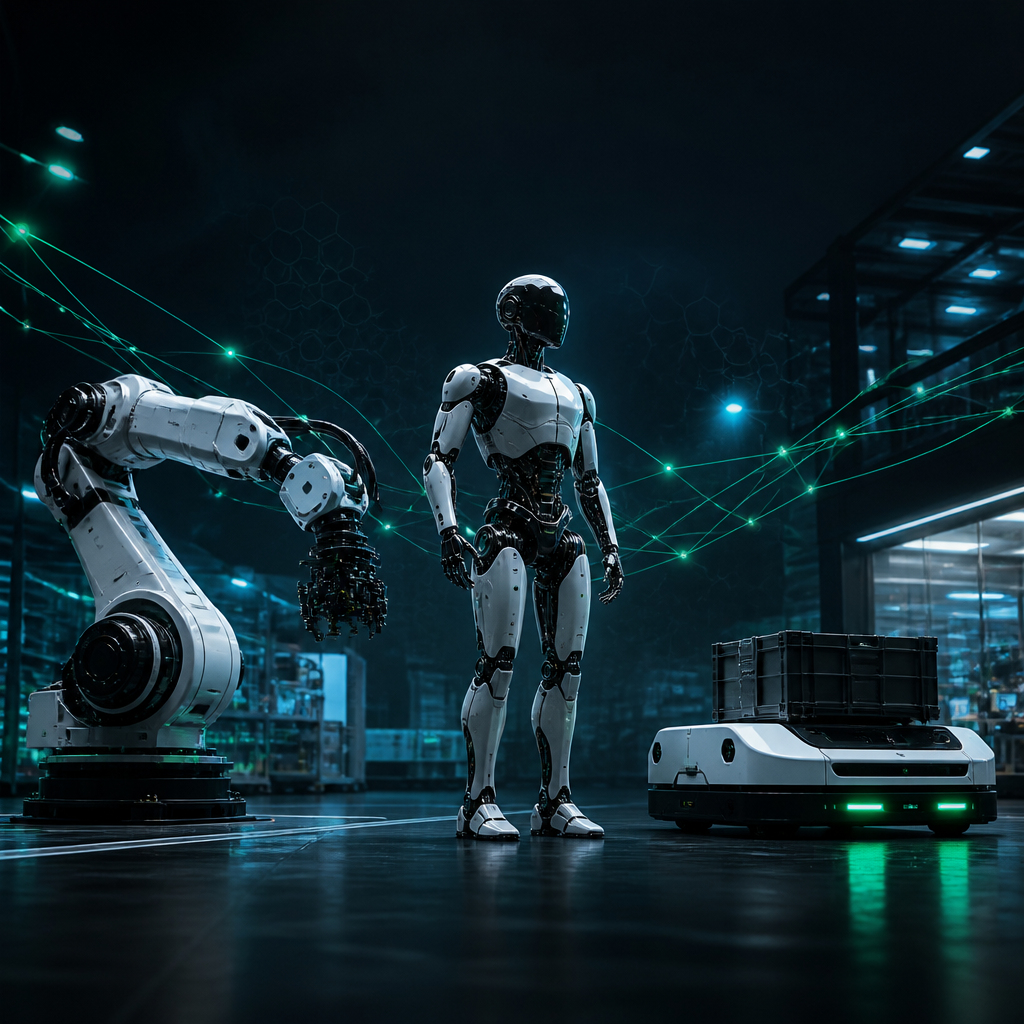
Robotics has become one of the most heavily funded and closely watched arenas in all of technology — a field where a startup with no revenue can command a $39 billion valuation, where a Chinese firm can grow revenue 335% in a year, and where the world's biggest automakers and tech giants are pouring in capital to build the machines they believe will reshape labor itself. But the robotics industry is far broader and more nuanced than the viral videos of backflipping humanoids suggest. It spans decades-old industrial giants quietly running the world's factories, warehouse specialists moving real freight today, and a new wave of AI-driven humanoid startups racing to prove they can do useful work at scale. Understanding who the players are — and separating genuine deployment from dazzling demonstration — is the key to making sense of where robotics actually stands in 2026.
This guide maps the robotics company landscape: the major categories of players, the humanoid race and its leaders, the deployment reality, the market, and how to read the industry clearly. (Valuations, funding figures, and shipment numbers vary by source and change fast, so treat them as estimates.)
The Categories of Robotics Companies
The robotics industry isn't one market but several, and companies tend to specialize:
- Industrial robotics giants — the established backbone. Companies like ABB, FANUC, KUKA, and Yaskawa have built and run the robotic arms that weld, assemble, and paint in factories worldwide for decades. This is the mature, profitable core of the industry, far removed from the humanoid hype.
- Warehouse and logistics robotics — firms building autonomous mobile robots and automation for fulfillment, a huge growth area driven by e-commerce.
- Humanoid robotics startups — the newest and most hyped category, racing to build general-purpose two-legged (or wheeled) robots for factories, warehouses, and eventually homes.
- Specialized robotics — companies focused on specific verticals: surgical robots, agricultural robots, delivery robots, drones, and cleaning robots.
- Component and software makers — the "picks and shovels" providing actuators, sensors, chips, and increasingly the AI software brains that make modern robots intelligent.
Each category has different economics, maturity, and risk. The industrial giants are stable and profitable; the humanoid startups are speculative bets on a future that hasn't fully arrived.
The Humanoid Race: The Leaders
The humanoid category commands the most attention, funding, and hype in 2026. There's no single winner — leadership depends entirely on which metric you use, and the leading companies each own a different lane:
- Figure AI — a US AI-first contender that has become the funding leader, reaching a reported valuation around $39 billion. It has run pilots at a BMW plant and focuses on manufacturing and general-purpose work, positioning its vision-language-action AI as the differentiator.
- Agility Robotics — widely viewed as first to genuine commercial deployment. Its Digit robot, built for warehouses, reportedly moved over 100,000 totes in a live GXO Logistics run and has been piloted in Amazon facilities. When verified commercial work is the metric, Agility leads.
- Tesla (Optimus) — leveraging Tesla's Full Self-Driving AI and manufacturing muscle, targeting in-house deployment at its own factories first, with ambitions for low-cost mass production over time. Optimus's next generation is expected around production start.
- Boston Dynamics (Atlas) — the legendary maker of the most athletic robots, now owned by Hyundai. Its electric Atlas is headed into Hyundai factories, with production begun and early deployments committed to Hyundai and Google DeepMind. Boston Dynamics set the blueprint for advanced robotics.
- Apptronik (Apollo) — a well-funded US player (raising significant capital at a multi-billion valuation) piloting its Apollo robot at Mercedes-Benz sites.
- 1X Technologies (Neo) — focused on the home, taking pre-orders for its Neo home robot at around $20,000, with US shipments beginning in 2026.
- Chinese players — Unitree and AgiBot — furthest along on volume and cost. Unitree's G1 is among the lowest-cost production humanoids (starting around $16,000), aimed at developers, and the company posted explosive revenue growth and filed for an IPO. AgiBot and Unitree led 2025 shipments, each around 5,000 units, though the exact ranking is disputed.
The telling pattern: Figure leads on funding, Agility on real deployment, Unitree and AgiBot on volume and price, Boston Dynamics on hardware capability, and 1X on the home. No one leads on everything.
The Deployment Reality
Here's the crucial context that separates informed observers from hype-followers: as of mid-2026, no humanoid robot has been deployed in quantities above the low hundreds in a sustained, commercially priced production environment. The clearest real-world data points — Agility's Digit at GXO and Figure's pilot at BMW — are genuine but still early-stage commercial deployments. The athletic demonstrations that go viral (Atlas doing backflips) represent research and capability showcases, not daily productive work.
This gap between demonstration and deployment is the single most important thing to understand about robotics companies in 2026. The technology is advancing at remarkable speed — robots are learning to manipulate objects, navigate real spaces, and operate with increasing autonomy through AI — but translating that into reliable, cost-effective work at scale remains genuinely hard. Humanoid platforms today are largely confined to ambient-temperature, non-hazardous logistics and light-assembly settings, ceding hazardous and specialized environments to certified industrial arms. The industry is at an inflection point, but the "robot workforce" remains largely ahead of us, not yet here.
The Market Shakeout
A sign of the category's maturation is that the shakeout has begun. Alongside the fundraising megadeals — a European humanoid firm reportedly raising up to $1.4 billion, US startups raising hundreds of millions — some companies have failed or been absorbed. A few startups shut down in late 2025 and early 2026, and larger players have made acquisitions (Amazon reportedly acquiring a home-robot startup, for example). This is the normal pattern of an emerging industry: enormous capital flows in, many players compete, and consolidation weeds out those who can't reach commercial viability. For the humanoid category specifically, the key risk is that many companies are spending heavily without a clear path to positive unit economics, making runway management critical — the strongest-positioned are those backed by strategic corporate investors (like Amazon with Agility, or Hyundai with Boston Dynamics) that provide both capital and real deployment environments.
The Market and the Money
The robotics market overall is large and growing rapidly, spanning the mature industrial segment and the fast-emerging humanoid and service categories. The humanoid segment in particular has attracted extraordinary investment on the thesis that general-purpose robots could eventually address vast labor markets. Valuations reflect that optimism more than current revenue: Figure's reported ~$39 billion valuation, for instance, rests on future potential rather than today's sales. For public-market investors, direct exposure is limited — most leading humanoid companies remain private. The clearest listed exposures in 2026 include Tesla (deploying Optimus in-house), UBTECH Robotics (often cited as the most direct pure-play humanoid stock on a major exchange), Xiaomi, and Hyundai (which owns Boston Dynamics). This is an investment area with genuine promise but also genuine risk, given the gap between valuations and proven commercial economics — a reason for careful, informed judgment rather than hype-driven enthusiasm. (This is general information, not investment advice.)
How to Read the Robotics Landscape
A few principles help make sense of the field. Distinguish deployment from demonstration — ask whether a company's robots are doing real, sustained, commercially priced work, or performing impressive demos. Distinguish funding from revenue — a high valuation reflects investor belief about the future, not current commercial success. Recognize that different companies lead on different metrics — there's no single "best" robotics company, only leaders in deployment, funding, hardware, cost, or a specific application. Appreciate the mature core — the industrial robotics giants quietly generating real profits are as much a part of the industry as the flashy startups. And watch the strategic backers — corporate investors with capital and deployment environments often determine which startups survive the shakeout.
The Future
The robotics company landscape will keep evolving rapidly. Expect continued massive investment in humanoids alongside a widening gap between companies achieving real commercial deployment and those that don't; further consolidation as the shakeout continues; the industrial and warehouse segments to keep growing steadily and profitably; and AI advances (especially vision-language-action models) to increasingly determine competitive advantage, as software intelligence becomes as important as hardware. Chinese manufacturers will keep pressuring on cost and volume, while US and European players emphasize AI and high-value deployments. Whether and when humanoids achieve mass commercial viability remains the industry's defining open question — and the companies that answer it convincingly will define the next era of robotics.
Conclusion
The robotics company landscape in 2026 is a study in contrasts: mature industrial giants running the world's factories profitably, warehouse specialists moving real freight today, and a hyped, heavily funded wave of humanoid startups racing toward a future that's arriving unevenly. The humanoid leaders — Figure, Agility, Tesla, Boston Dynamics, Apptronik, 1X, Unitree, and AgiBot — each lead on different metrics, from funding to deployment to cost, with no single winner.
The essential insight is to separate genuine deployment from dazzling demonstration: despite remarkable progress, no humanoid is yet working at large commercial scale, and the "robot workforce" remains more ahead of us than here. Robotics is a field of extraordinary promise and real hype in equal measure, and understanding the companies — who's deploying, who's raising, who's shipping, and who's just showcasing — is the key to seeing clearly where this transformative industry actually stands. As always, this is general information, not investment advice.
Want more? Explore AxionSquare for ongoing coverage of robotics companies, humanoid robots, and the technologies reshaping automation.
Frequently Asked Questions
What are the top robotics companies in 2026?
In humanoids, the leaders include Figure AI, Agility Robotics, Tesla (Optimus), Boston Dynamics (Atlas), Apptronik (Apollo), 1X Technologies (Neo), Unitree, and AgiBot — each leading on a different metric. In mature industrial robotics, giants like ABB, FANUC, KUKA, and Yaskawa run factory automation worldwide. There's no single "best" company; leadership depends on whether you measure deployment, funding, hardware, or cost.
Which company has actually deployed humanoid robots commercially?
Agility Robotics is widely viewed as first to genuine commercial deployment — its Digit robot reportedly moved over 100,000 totes in a live GXO Logistics warehouse run and has been piloted in Amazon facilities. Figure and Apptronik have run pilots at BMW and Mercedes-Benz plants. However, as of mid-2026, no humanoid has been deployed above the low hundreds in sustained, commercially priced production.
How much are robotics companies worth?
Valuations reflect future potential more than current revenue. Figure AI has reached a reported valuation around $39 billion, and a European firm reportedly raised up to $1.4 billion — despite limited commercial sales. This gap between valuation and proven economics is a key risk in the sector. Most leading humanoid companies are private; public exposure comes mainly through Tesla, UBTECH, Xiaomi, and Hyundai.
Are humanoid robots actually being used at scale yet?
Not yet. Despite rapid progress and impressive demonstrations, no humanoid robot has been deployed above the low hundreds in a sustained, commercially priced environment as of mid-2026. The clearest real deployments (Agility at GXO, Figure at BMW) are still early-stage. The viral athletic demos represent research showcases, not daily productive work. The gap between demonstration and deployment is the field's defining reality.
Which robotics companies are publicly traded?
Most leading humanoid companies remain private. The clearest public-market exposures in 2026 include Tesla (deploying Optimus in-house), UBTECH Robotics (often cited as the most direct pure-play humanoid stock on a major exchange), Xiaomi, and Hyundai Motor (which owns Boston Dynamics). Industrial robotics giants like ABB, FANUC, and Yaskawa are also publicly traded and represent the mature, profitable side of the industry.
Sources and further reading
- IFR: World Robotics Report — Industrial automation growth and adoption statistics