Autonomous Vehicle Deployment: Commercial Scaling and Regulatory Realities
Driverless transportation has transitioned from experimental R&D into a commercial reality, with major deployments indicating a shift toward routine operational utility.
Transportation · Global · 2026-06-13 · 11 min read · By John Awab
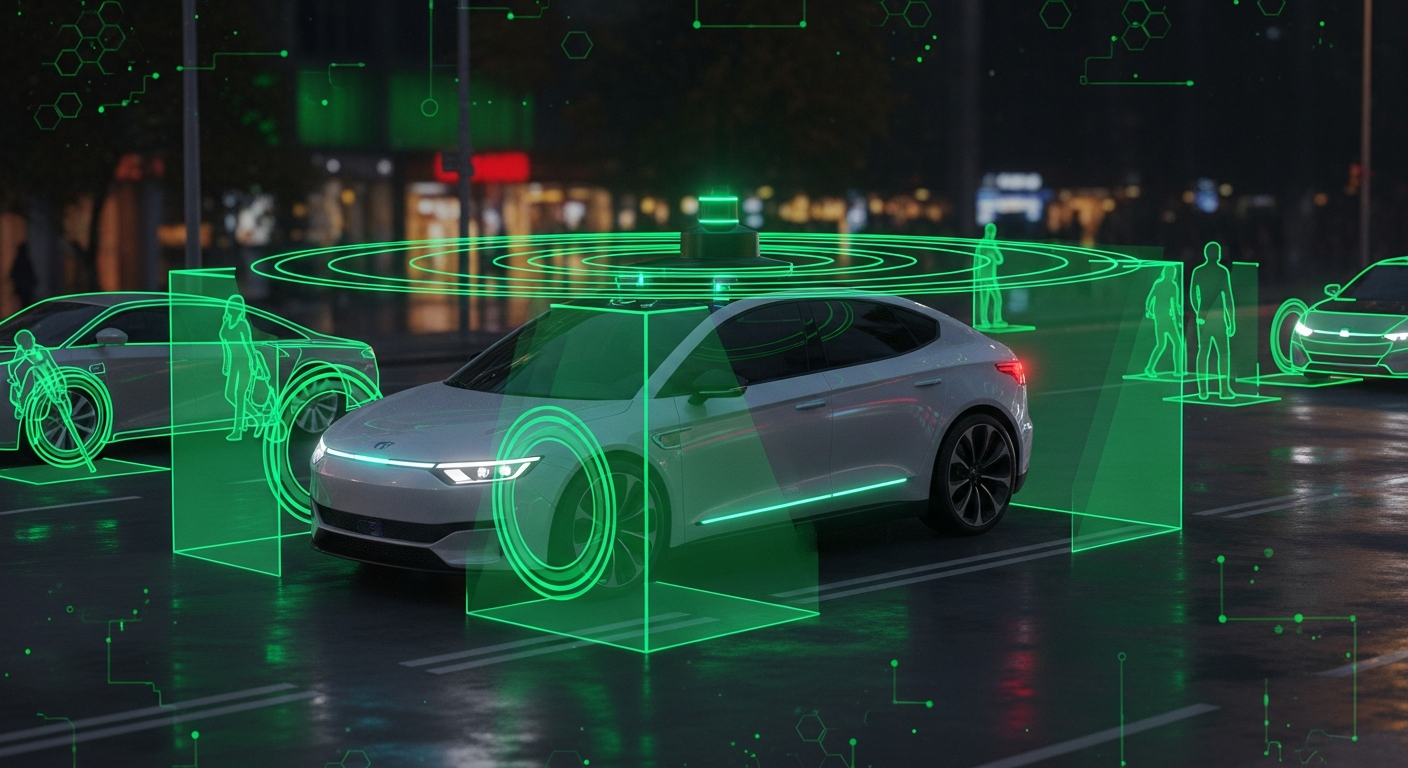
For a decade, self-driving cars were perpetually "five years away." In 2026, that excuse finally collapsed. Waymo now gives over 500,000 paid driverless rides every week across more than ten US cities, Tesla has rolled its first steering-wheel-free Cybercab off the production line, and robotaxis have crossed from science-fair demo into everyday commercial reality. One industry observer's prediction captures the moment perfectly: by the end of 2026, self-driving cars will be boring — so routine that they barely make headlines anymore.
This guide explains what self-driving cars are, the levels of autonomy, how they actually work, the two competing approaches battling for the future, where the industry stands in 2026, and the safety and regulatory questions that remain. Here is the clear picture.
What Are Self-Driving Cars?
A self-driving car — also called an autonomous vehicle (AV) — is a vehicle that can sense its environment and operate without human input, using sensors, software, and artificial intelligence to navigate roads, obey traffic rules, and avoid obstacles. A robotaxi is a self-driving car used for paid ride-hailing, with no human driver.
The key distinction many people miss is that "self-driving" is a spectrum, not a single thing. The driver-assist features in a typical new car are worlds apart from a fully driverless robotaxi — and confusing the two is the source of much hype and misunderstanding.
The Levels of Autonomy
The industry uses a 0-to-5 scale defined by SAE International:
- Level 0 — no automation; the human does everything.
- Level 1 — basic assistance, like adaptive cruise control.
- Level 2 — the car can steer and accelerate together, but the human must supervise constantly (most "self-driving" consumer features today).
- Level 3 — the car drives itself in limited conditions, but the human must be ready to take over.
- Level 4 — fully driverless within a defined area or condition (the "operational design domain"). This is what today's robotaxis are.
- Level 5 — full autonomy anywhere, in any condition. This does not yet exist.
The leap from Level 2 to Level 4 is enormous — it's the difference between a car that helps you drive and one that needs no driver at all.
How Self-Driving Cars Work
A self-driving car runs a continuous loop:
- Perceive — sensors (cameras, and often radar and lidar) build a real-time 3D picture of the surroundings.
- Understand — AI identifies what each object is: a pedestrian, a cyclist, another car, a traffic light.
- Predict — the system forecasts what those objects will do next.
- Plan — it decides on a safe path and speed.
- Act — it steers, accelerates, and brakes accordingly.
This cycle repeats many times per second, powered by neural networks trained on enormous amounts of driving data, often combined with detailed high-definition maps of the operating area.
Two Approaches: Sensor-Rich vs Vision-Only
The industry's two leaders represent fundamentally different bets on how to crack autonomy.
Waymo (sensor-rich) uses an expensive array of lidar, radar, and cameras, operates a company-owned fleet, and confines service to carefully mapped areas. The philosophy: maximize safety and reliability with redundant sensors and tight geographic control, then expand city by city.
Tesla (vision-only) bets on cameras alone, paired with neural networks trained on data from its huge fleet of customer-driven cars, aiming for general autonomy that works anywhere rather than in mapped zones. The philosophy: if the AI is good enough, cameras are sufficient, and scale comes from existing vehicles.
A middle path is emerging too — some consumer-vehicle efforts pair camera-based driving (like Wayve's stack) with added radar and lidar for extra safety guarantees. Which approach wins — or whether several coexist — is one of the defining questions of the decade.
The State of Self-Driving Cars in 2026
The honest assessment in 2026 is that one company is clearly ahead in commercial deployment. Waymo operates a fully driverless, revenue-generating robotaxi service in around ten US cities with roughly 3,000 vehicles, surpassed 500,000 paid rides per week in early 2026, and is expanding aggressively (including a planned Washington, D.C. launch). There is no safety driver and no remote operator able to steer during commercial rides.
Tesla transitioned its Austin robotaxi service to genuinely unsupervised operation (no human in the vehicle) in January 2026 and began mass-producing its purpose-built Cybercab, with plans to expand to several more cities. But its deployed fleet remains small — on the order of dozens of authorized vehicles in Texas versus Waymo's hundreds in the same state — and its ambitious near-term targets have slipped. The contrast captures 2026: Waymo is scaling a proven service, while Tesla is racing to prove its different approach can catch up.
The Key Players
Beyond the two leaders, the field is crowded. Zoox (Amazon) is developing a purpose-built robotaxi, Nuro focuses on autonomous delivery, and WeRide is deploying autonomous shuttles in Europe and beyond. Autonomous trucking and delivery are parallel frontiers, as moving goods on predictable routes is in some ways easier than navigating chaotic city streets with passengers.
Safety: What the Data Shows
Safety is the central question, and the evidence is still being written. Waymo has accumulated a large body of driverless miles with a safety record its proponents argue compares favorably to human drivers, and it publishes detailed incident narratives. Tesla's Austin fleet has logged a number of low-speed collisions and a few minor injuries since launch, and the company has drawn scrutiny for redacting crash descriptions that competitors disclose. The broad pattern: autonomous vehicles appear safe within their carefully defined operating areas, but independent, apples-to-apples verification across companies is still lacking — so safety claims are best treated as contested until confirmed.
Regulation and Challenges
The rules are racing to catch up. New state laws are giving regulators greater oversight of AVs, federal crash-reporting requirements are tightening, and some jurisdictions still require a human behind the wheel. Beyond regulation, real hurdles remain: handling rare "edge cases," scaling beyond mapped areas, establishing liability when no human is driving, winning public trust, and managing the impact on the livelihoods of millions of professional drivers — a source of significant social and political tension.
The Benefits and Promise
The potential upside is large. Most traffic crashes involve human error, so reliable autonomy could save lives. Self-driving vehicles could expand mobility for people who can't drive, reduce the need for personal car ownership, ease congestion through coordination, and reclaim time spent commuting. These benefits are why the technology has attracted enormous investment despite the challenges.
The Future
The trajectory points toward steady, city-by-city expansion of robotaxis, falling sensor costs, improving AI, and a gradual march from Level 4 in defined areas toward broader capability. Full Level 5 autonomy everywhere remains distant, but the once-futuristic experience of summoning a driverless car is becoming routine in a growing list of cities. As deployments scale and safety records lengthen, public acceptance is likely to follow — exactly as the "self-driving cars will be boring" prediction suggests.
Conclusion
2026 is the year self-driving cars crossed from promise into reality. Waymo is operating driverless robotaxis at meaningful scale, Tesla is pushing a different vision-only bet toward mass production, and a crowded field is chasing both. Understanding the levels of autonomy, how the technology works, and the competing approaches is key to cutting through the hype.
Real questions remain around safety transparency, regulation, edge cases, and jobs. But the direction is unmistakable: the driverless car is no longer five years away — it's giving half a million rides a week. The road ahead is about scaling safely, earning trust, and turning a remarkable technology into an everyday one.
Want more? Explore AxionSquare for ongoing coverage of self-driving cars, electric vehicles, and the future of transportation.
Frequently Asked Questions
What is a self-driving car?
A self-driving car, or autonomous vehicle, senses its environment and operates without human input using sensors, software, and AI. A robotaxi is a fully driverless self-driving car used for paid ride-hailing.
How do self-driving cars work?
They run a continuous loop: sensors perceive the surroundings, AI identifies objects and predicts their behavior, the system plans a safe path, and then it steers, accelerates, and brakes — repeating many times per second, often using neural networks and high-definition maps.
What are the levels of self-driving cars?
The SAE scale runs from Level 0 (no automation) to Level 5 (full autonomy anywhere). Most consumer "self-driving" features are Level 2 (supervised assistance), while today's robotaxis are Level 4 (fully driverless within a defined area). Level 5 does not yet exist.
Who is leading in self-driving cars in 2026?
Waymo leads in commercial deployment, operating fully driverless robotaxis in around ten US cities with roughly 3,000 vehicles and over 500,000 paid rides per week. Tesla is expanding a smaller, vision-only robotaxi service and producing its Cybercab, but trails in deployed scale.
Are self-driving cars safe?
Within their operating areas, autonomous vehicles have shown strong safety performance, and most crashes overall involve human error. However, transparency, independent verification, and handling rare edge cases remain works in progress, so company safety claims are best treated as contested until independently confirmed.
Sources and further reading
- NHTSA - Automated Driving Systems — Regulatory frameworks and safety requirements for AVs.
- SAE International - Levels of Driving Automation — Standardized definitions of autonomy levels.