Startup Business Model Dynamics: Scaling and Revenue Architecture
A business model defines a startup's viability by establishing a repeatable mechanism for value creation and revenue conversion, critical for long-term scalability.
Startups · Global · 2026-06-12 · 10 min read · By John Awab
Two startups can build nearly identical products and end up with wildly different outcomes — one scales to billions, the other quietly dies. The difference often isn't the product at all. It's the business model: how the company creates value, delivers it, and turns it into revenue. A business model isn't a document you write once and file away; it's the mechanism that determines whether your startup survives.
This guide explains what a startup business model is, breaks down the main types with real examples, shows you how to choose the right one, and covers the monetization trends reshaping how startups make money in 2026. Whether you're building a company or studying how they work, here is the clear picture.
What Is a Startup Business Model?
A startup business model is the framework that defines how a company creates value for customers, delivers that value, and captures a portion of it as revenue. In plain terms: what you offer, who you offer it to, how you reach them, and how you make money doing it.
A strong business model answers four questions clearly: What problem do you solve and for whom? How do customers get your product? How do you earn revenue? And do the economics work — does each customer earn more than it costs to serve them? Get those answers right and growth compounds; get them wrong and no amount of product polish will save you.
Business Model vs Revenue Model
These two terms are often confused. A business model is the whole picture — value creation, delivery, customers, costs, and revenue. A revenue model is just one piece of it: specifically how you charge (subscription, commission, advertising, and so on). Every business model contains a revenue model, but the business model is the broader system. Choosing a revenue model without designing the full business model around it is a common early mistake.
The Core Components of a Business Model
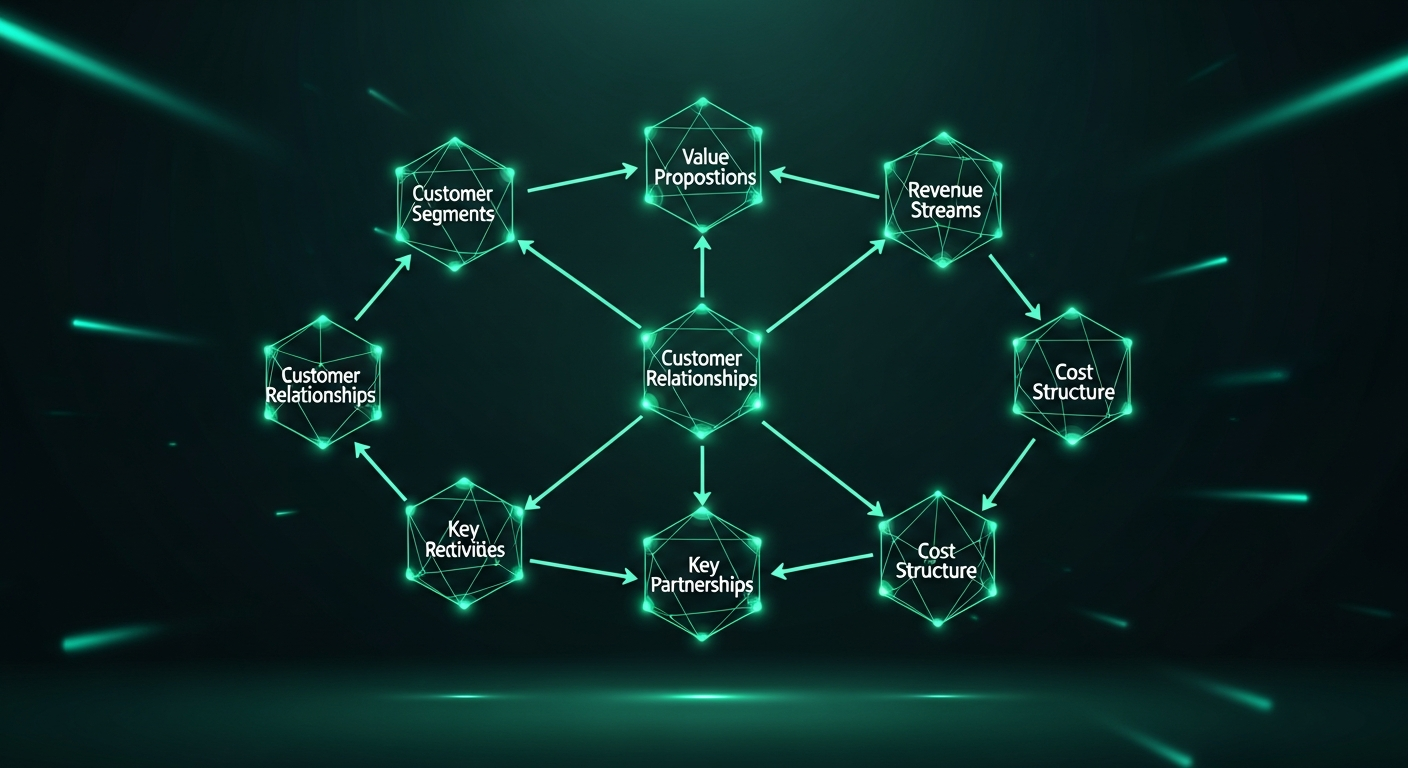
Most frameworks, like the popular Business Model Canvas, break a model into a handful of building blocks:
- Value proposition — the specific benefit you deliver and why it's better than alternatives.
- Customer segments — who you serve, defined narrowly enough to win.
- Channels — how you reach and deliver to customers.
- Revenue streams — how value converts to money.
- Cost structure — what it costs to build and deliver.
Map these honestly and the viability of a startup becomes clear before you've spent a fortune building it.
The Main Types of Startup Business Models
There are dozens of patterns, but most startups use a variation of these:
- SaaS / subscription — customers pay recurring fees for access to software. Predictable revenue and high margins make it the default for software startups. Example: most modern software tools.
- Marketplace / platform — connect two sides (buyers and sellers) and take a cut of transactions. Powerful network effects but hard to start. Example: Airbnb, Uber.
- Freemium — a free tier drives adoption while paid tiers monetize power users. Example: many consumer apps.
- Transaction / commission — earn a percentage of each transaction processed. Example: payment processors like Stripe.
- Advertising — offer a product free and earn from advertisers who want access to users. Example: Meta's platforms.
- Usage-based — customers pay for what they consume (API calls, compute, storage). Increasingly popular in the AI era.
- Licensing — license technology or IP to others for a fee. Example: chip and patent licensing.
- E-commerce / direct-to-consumer (D2C) — sell physical products directly online.
- Hardware (and razor-and-blades) — sell a device, sometimes monetizing recurring consumables or services around it.
- API / platform-as-a-service — sell programmatic access for developers to build on.
Many successful startups blend more than one — for instance, a subscription base plus usage-based overage.
How to Choose the Right Business Model
The best model depends on your product, market, and customers. A few guiding questions: Does your product deliver value continuously (favoring subscriptions) or per-transaction (favoring commissions)? Do you connect two groups (favoring a marketplace)? Who pays most easily — the user, or a third party like an advertiser? And critically, do the unit economics work — is customer lifetime value comfortably higher than acquisition cost, with healthy margins? The right model aligns how you earn with how customers get value — and if they're misaligned, you're fighting yourself.
Business Model Trends in 2026
How startups monetize is shifting fast. Four trends stand out:
The move from per-seat to usage- and outcome-based pricing. A large majority of software suppliers now use usage-based models, and the frontier is outcome-based pricing — charging for results delivered rather than seats sold. This is more than a pricing tweak; it's a business model transformation, because a single AI agent can replace many "seats," breaking the old per-user logic. Outcome models often start with lower revenue per customer but produce higher retention, since customers only pay when they succeed.
Embedded finance as a high-margin add-on. Non-financial startups are increasingly embedding lending, payments, or insurance into their products, capturing high-margin financial revenue from customers they already have. With distribution already built, it's an efficient way to add a lucrative second revenue stream.
Community-led growth as distribution. A growing number of startups build a community (forum, Slack, Discord, events) as a primary channel rather than a marketing afterthought — a model that spread products like Figma and dbt before most people had heard of them.
AI-native economics as the baseline. AI, automation, and data-driven personalization are no longer advantages but expectations, and many companies are adopting new monetization strategies specifically to offset rising AI and cloud costs.
How to Validate and Evolve Your Model
A business model is a hypothesis until customers prove it. Test the riskiest assumptions early: will customers pay, at what price, and through what channel? Run small experiments — pre-sales, pricing tests, pilot customers — before committing. And stay flexible: many of the most successful companies pivoted their model on the way to product-market fit. Watch your unit economics as you scale; a model that works at small scale can break if acquisition costs rise faster than lifetime value grows.
The Bottom Line
Your startup business model is your blueprint for survival — the mechanism that turns a good product into a sustainable company. Understand the core components, pick a model (or blend) that aligns how you make money with how customers get value, and pressure-test the unit economics before scaling.
In 2026, the smartest startups are rethinking not just what they sell but how they charge — embracing usage- and outcome-based pricing, embedded finance, community-led distribution, and AI-native economics. Design your model deliberately, validate it with real customers, and evolve it as you learn. That discipline is often the difference between scaling with purpose and being scaled out of relevance.
Want more? Explore AxionSquare for ongoing guides to startups, business models, and building a company that lasts.
Frequently Asked Questions
What is a startup business model?
A startup business model is the framework defining how a company creates value for customers, delivers it, and captures revenue — covering what you offer, who you serve, how you reach them, and how you make money.
What is the difference between a business model and a revenue model?
A business model is the whole system — value creation, delivery, customers, costs, and revenue. A revenue model is just the part that describes how you charge (subscription, commission, advertising). Every business model includes a revenue model.
What are the main types of startup business models?
Common types include SaaS/subscription, marketplace/platform, freemium, transaction/commission, advertising, usage-based, licensing, e-commerce/D2C, hardware, and API/platform models. Many startups blend more than one.
Which business model is best for a startup?
It depends on your product and customers. Subscriptions suit continuous value, marketplaces suit connecting two groups, and commission models suit transactions. The best model aligns how you earn revenue with how customers get value, with healthy unit economics.
What are the biggest business model trends in 2026?
The shift from per-seat to usage- and outcome-based pricing, embedded finance as a high-margin add-on, community-led growth as a distribution channel, and AI-native economics becoming the baseline expectation.