Strategic Technology Trends: Infrastructure and Physical Intelligence
Business leadership is shifting focus from experimental adoption to the construction of durable technological foundations, emphasizing physical AI and integrated intelligence.
Technology · Global · 2026-06-12 · 9 min read · By John Awab
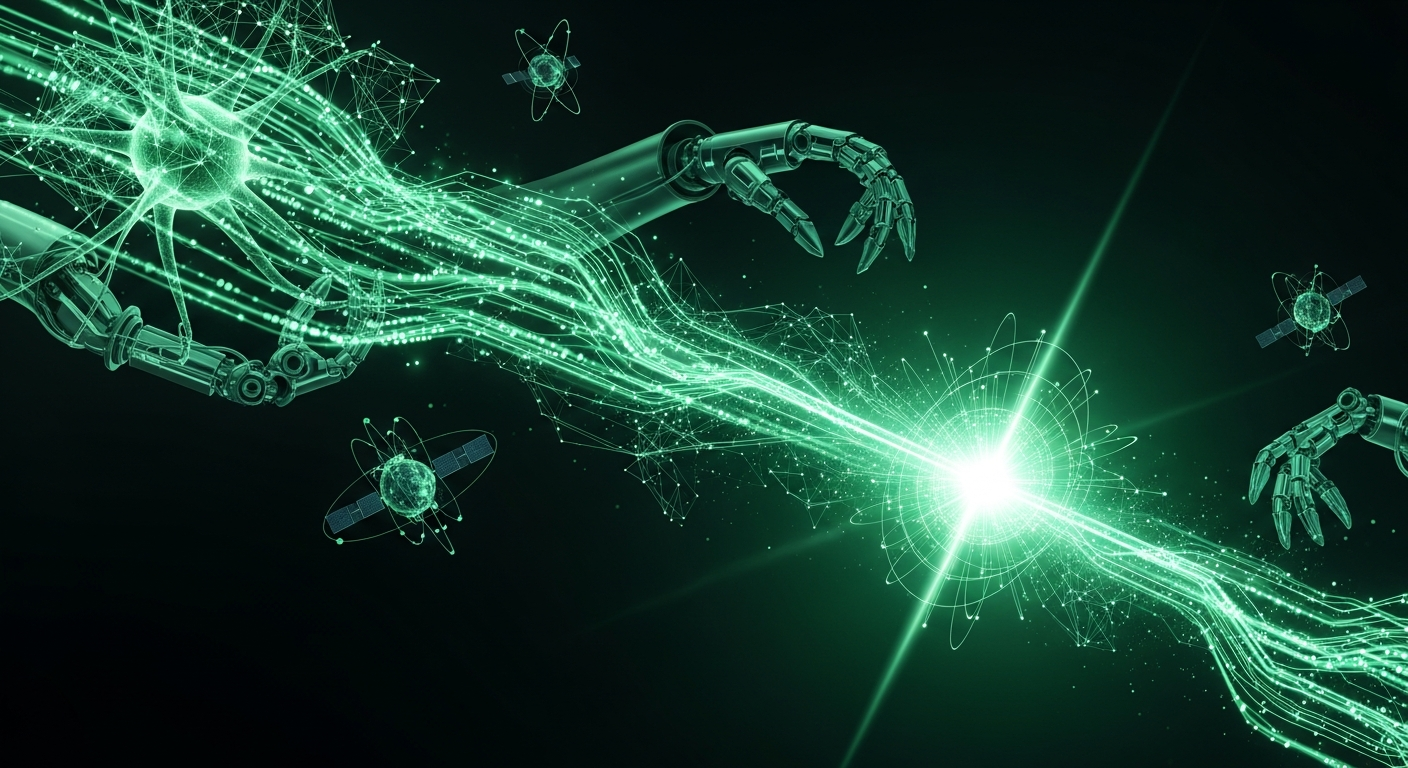
If 2025 was the year businesses experimented with new technology, 2026 is the year they have to build for real. The defining message across every major forecast is the same: technology leadership in 2026 is no longer about experimentation, but about constructing the durable foundations that future innovation will depend on. AI is no longer optional, intelligence is escaping the screen into the physical world, and a wave of converging technologies is rewiring how we live, work, and compute.
This guide breaks down the most important technology trends of 2026 — what's actually changing, why it matters, and how the pieces fit together. Consider it a map of the year's biggest shifts, with deeper dives available across our coverage of AI, robotics, fintech, and transportation.
The Big Picture: From Experimentation to Foundations
The overarching theme of 2026 is structural rebuilding. After years of pilots and proofs-of-concept, organizations are moving from "let's try AI" to "let's rebuild on AI." That means redesigning enterprise architecture, software development, security, and infrastructure around intelligent systems rather than bolting them on. The leaders pulling ahead aren't the ones with the flashiest demos — they're the ones laying resilient, scalable groundwork for the next decade.
AI Becomes the Backbone
Artificial intelligence has shifted from a feature to the foundation of enterprise technology. The most consequential development is the rise of AI agents — systems that don't just suggest but act autonomously. They're delivering real value, but the hard part in 2026 is measuring it: proving return on investment is now the central challenge, and analysts warn that a large share of hastily launched agent projects will be canceled before they mature.
Two related shifts matter. Multiagent systems let modular AI agents collaborate on complex tasks, improving automation and scale. And AI-native development platforms — software that increasingly builds itself — empower small, nimble teams to ship faster than ever. The takeaway: AI is becoming infrastructure, and the winners will be those who deploy it with discipline rather than hype.
Physical AI: Intelligence Leaves the Screen
The most visible frontier of 2026 is physical AI — intelligence embodied in machines that act in the real world. The examples are no longer theoretical: Amazon has deployed its millionth warehouse robot, coordinated by a fleet-wide AI that improved travel efficiency by around 10%, while some automakers now have cars driving themselves through kilometer-long factory routes. Intelligence is increasingly embodied, autonomous, and solving real problems off-screen — the convergence of robotics and AI is accelerating from research into real operations.
The New Security Frontier
As AI and connectivity expand, so does risk — and 2026 brings a security reckoning. Post-quantum cryptography is moving from research to deployment as organizations prepare for a future where quantum computers could break today's encryption. Confidential computing protects sensitive data even while it's being used, enabling secure AI across untrusted infrastructure. And on the threat side, AI-powered fraud, deepfakes, and agent-based attacks are driving a parallel boom in AI-powered defense — security is no longer a department, it's a core engineering discipline.
Next-Generation Computing
Beyond conventional chips, new computing paradigms are maturing. Quantum computing is accelerating scientific discovery and complex optimization. Neuromorphic computing — chips modeled on the brain — promises dramatic efficiency gains for AI workloads. And AI supercomputing platforms are unlocking breakthroughs in model training, though they demand careful governance and cost control. Together, these point toward a more specialized, heterogeneous computing landscape where the right compute for the right task matters more than raw speed.
Tech Sovereignty and Dual-Use Technology
Geopolitics is reshaping technology strategy. Tech sovereignty — the drive for nations and organizations to control their critical technology and data — has become a strategic priority, pushing leaders to build resilient, interdependent systems rather than depend on any single provider. Closely tied to this is the rise of dual-use and defense technology, as the line between commercial and security applications blurs and capital floods into the sector.
Money Gets Programmable
Finance is being rebuilt on new rails. The standout 2026 trend is stablecoins going corporate — major companies adopting blockchain-based digital currencies for payments and settlement, moving crypto infrastructure from speculation toward practical enterprise use. Combined with the emergence of agentic payments — AI agents that can transact autonomously — money itself is becoming programmable, a shift with deep implications for fintech and commerce.
The Convergence Theme
Perhaps the most important meta-trend is that these technologies aren't evolving in isolation. Artificial intelligence, robotics, biotechnology, energy systems, and communications are advancing simultaneously and influencing one another, creating a landscape where digital, biological, and physical systems increasingly operate together. The signals are everywhere: self-driving labs accelerating pharmaceutical discovery, synthetic biology and fusion energy advancing sustainability, and AI agents coordinating physical robots in real-world operations. This convergence is creating capabilities none of these fields could achieve alone.
What These Trends Mean for You
For business leaders, the message is to build foundations, not just experiment: invest in AI infrastructure, security, and governance now, and treat agents as tools requiring measurement and discipline. For professionals, routine research, drafting, and analysis will be increasingly augmented, raising the premium on judgment and strategy. For everyone, the pace of change is accelerating and the technologies are interlocking — understanding how AI, robotics, fintech, and energy relate to one another is the new baseline for navigating 2026.
The Bottom Line
The technology trends of 2026 share a common thread: a shift from experimentation to durable foundations, with AI as the backbone, intelligence moving into the physical world, security and computing being rebuilt, and a wave of converging technologies reshaping entire industries. This isn't a year of isolated gadgets — it's a year of structural transformation.
The organizations and individuals who thrive will be those who understand the connections: how agentic AI, physical robotics, programmable money, and next-generation computing fit into a single, accelerating system. Build on solid ground, stay disciplined about value, and watch where the technologies converge — that's where the future is being written.
Want more? Explore AxionSquare for deep dives into AI, robotics, fintech, transportation, and the innovations shaping tomorrow.
Frequently Asked Questions
What are the biggest technology trends in 2026?
AI becoming the backbone of enterprise systems (especially AI agents), physical/embodied AI in robotics, post-quantum cryptography and confidential computing, next-generation computing like quantum and neuromorphic chips, tech sovereignty, corporate stablecoins, and the convergence of AI, robotics, biotech, and energy.
Why is 2026 considered a turning point for technology?
Because the focus has shifted from experimenting with new technology to building durable foundations on it. AI is no longer optional, and organizations are rebuilding their architecture, security, and infrastructure around intelligent systems for the long term.
What is physical AI?
Physical AI, or embodied AI, is intelligence built into machines that act in the real world — like warehouse robots and self-driving systems. In 2026 it moved decisively from research into real operations, with examples like fleet-coordinated warehouse robots and self-navigating factory vehicles.
What is the convergence of technologies?
It's the trend of AI, robotics, biotechnology, energy, and communications advancing simultaneously and influencing one another, so that digital, biological, and physical systems increasingly operate together — creating capabilities none of these fields could achieve alone.
How will these trends affect businesses and workers?
Businesses are being pushed to invest in AI foundations, security, and governance while measuring real returns. For workers, routine research, drafting, and analysis are increasingly augmented by AI, raising the value of judgment, strategy, and skills that complement automation.