Fintech Market Segmentation: Identifying Leaders Across Core Financial Verticals
A structured examination of high-growth fintech enterprises categorized by functional vertical, analyzing business models and market valuation drivers.
Fintech · Global · 2026-06-07 · 10 min read · By John Awab
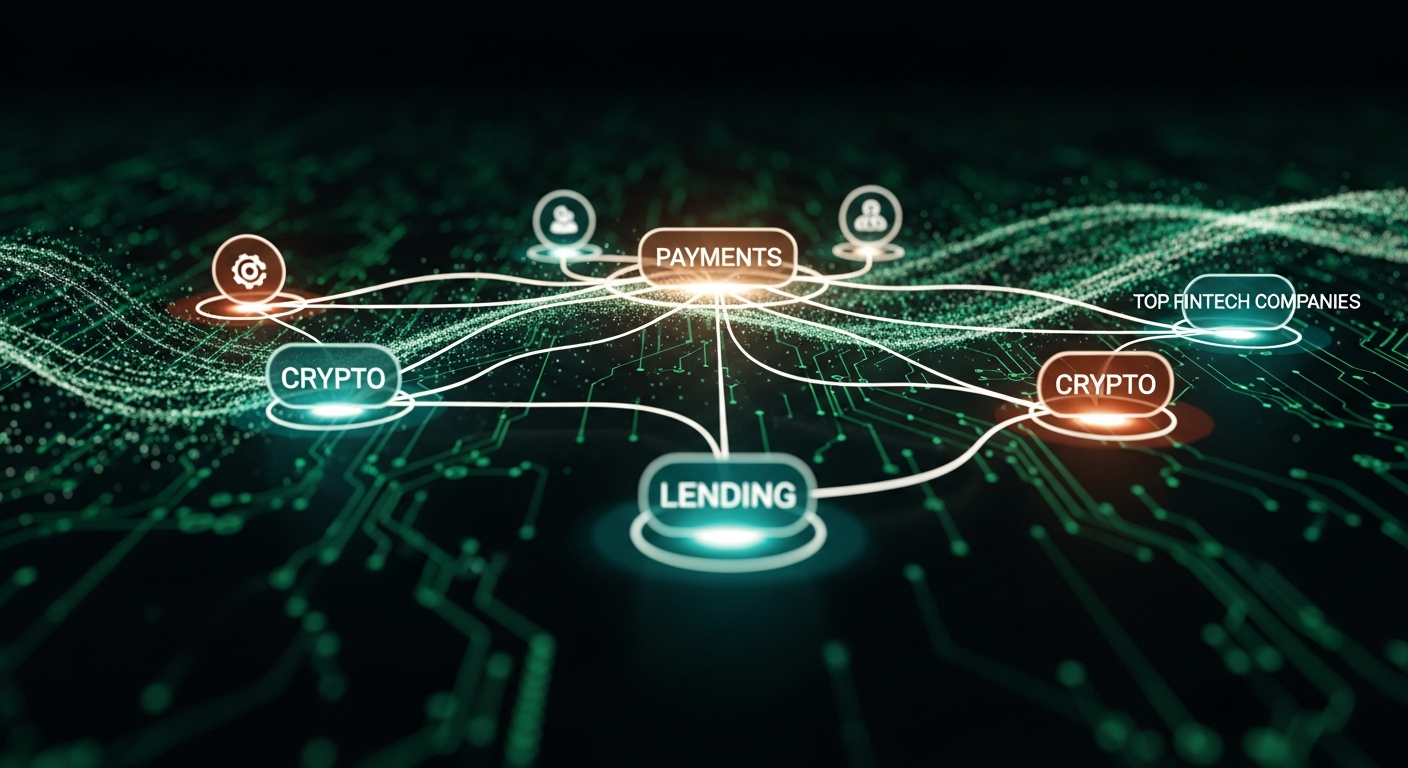
The fintech sector is home to some of the most valuable and fastest-growing businesses on earth — companies that move trillions of dollars, power the checkout button on millions of websites, and put a full bank inside your phone. But "fintech companies" is a sprawling label covering everything from card networks worth hundreds of billions to two-year-old startups rewriting how money works.
This guide maps the landscape. It explains what fintech companies actually do, how they make money, the leaders in each major category, and how to evaluate them whether you are an investor, a job seeker, or a founder. Rankings shift constantly, so the focus here is on the categories and the standout players that consistently define them.
What Are Fintech Companies?
Fintech companies use software, data, and digital platforms to deliver financial services — payments, banking, lending, investing, insurance — more efficiently than traditional institutions. Some are licensed banks; many are not, instead partnering with banks or operating as technology layers on top of the financial system.
What unites them is a software-first approach to money. Rather than digitizing a branch, they rebuild a financial product around APIs, mobile apps, and automation. The category spans consumer-facing brands you use directly and the invisible infrastructure companies that power thousands of other businesses behind the scenes.
How Fintech Companies Make Money
Understanding the business model is the fastest way to understand any fintech company. The common revenue engines:
- Transaction fees. Payment companies take a small cut of each transaction they process. At scale, tiny percentages become enormous revenue.
- Interchange. Card-issuing fintechs earn a share of the fee merchants pay when customers swipe.
- Interest and lending spread. Lenders and neobanks earn on the gap between what they pay on deposits and charge on loans.
- Subscriptions. Premium tiers, business plans, and SaaS pricing for software tools.
- Assets under management. Investing platforms charge a percentage of money they manage.
- Interchange plus float and add-ons. Many consumer apps layer multiple streams together.
A company's model shapes everything about it — which is why the smartest way to survey the field is by category.
Top Fintech Companies by Category
Payments
Payments is where fintech began and still has the deepest infrastructure. Stripe provides payments APIs that let businesses accept money online and has become foundational developer infrastructure. PayPal remains a consumer and merchant giant, with Venmo as its peer-to-peer arm. Block (formerly Square) serves merchants and runs the fast-growing Cash App, which has tens of millions of active users. Adyen and Checkout.com focus on enterprise payment processing, while Marqeta specializes in card issuing. Sitting above them all, the card networks Visa and Mastercard and processor Fiserv form the rails everyone else rides on.
Digital Banking and Neobanks
App-first banks have pulled hundreds of millions of customers from incumbents. Chime leads in the United States with fee-free mobile banking via partner banks. Revolut, N26, Monzo, and Starling dominate across Europe and the UK, while Nubank has become one of the largest digital banks in the world out of Latin America. Their pitch is consistent: low fees, instant onboarding, and a far better app experience.
Lending and Buy Now, Pay Later
Digital lenders use data and automation to approve credit in minutes. Klarna and Affirm turned buy now, pay later into a mainstream checkout option, and SoFi has grown from student-loan refinancing into a full digital financial platform. Upstart applies AI to credit decisioning.
Investing and Wealth
Robinhood popularized commission-free trading and broadened access to markets, while robo-advisors Betterment and Wealthfront automate portfolio management, and eToro blends investing with social features.
Crypto and Blockchain
Coinbase is the leading public-market crypto exchange, and Circle, issuer of the USDC stablecoin, has pushed stablecoins toward mainstream payments. These companies increasingly frame themselves as financial infrastructure rather than speculation.
Infrastructure and B2B Fintech
The least visible but most strategically important layer. Plaid connects apps to bank accounts, powering a huge share of the ecosystem. Banking-as-a-service and embedded-finance providers let any company offer financial products via API, and money-transfer specialists like Wise and Remitly have rebuilt cross-border payments around transparency and low cost.
The Biggest Fintech Companies by Valuation
When people ask about the "largest" fintech companies, they usually mean public-market value. By that measure, the giants are the established networks and platforms: China's Tencent ranks at the top globally, followed by Visa and Mastercard, with European players like Revolut and Wise also featuring among the most valuable. These firms combine massive reach, deep infrastructure, and steady profitability — a different profile from the high-growth private startups.
It is worth separating "biggest" from "best." The largest companies win on scale and reliability; the most exciting private leaders — names like Stripe, Revolut, Plaid, and Klarna that recur on founder lists — win on product traction and defensibility.
Fintech Unicorns and the Startup Landscape
Beyond the giants sits a vast startup ecosystem. There are now hundreds of fintech unicorns — private companies valued above a billion dollars — and tens of thousands of fintech startups worldwide. The United States hosts the largest cluster and the most unicorns, though strong hubs have emerged in the UK, Europe, India, Africa, and across Asia-Pacific, which is now the fastest-growing region.
After a funding slump that bottomed out in 2024, investment rebounded in 2025, even as deal volume kept falling — capital is concentrating into fewer, larger, more selective rounds. Investors increasingly favor companies with clear category leadership and improving unit economics over growth at any cost.
How to Evaluate a Fintech Company
Whether you are investing, job-hunting, or choosing a partner, a few questions cut through the noise:
- What layer is it in? Consumer app, or infrastructure others build on? Infrastructure tends to be stickier.
- How does it make money, and is the model sustainable? Profitable unit economics matter more than headline growth in 2026.
- How strong is the moat? Network effects, regulatory licenses, and deep integrations are durable advantages.
- How does it handle regulation and trust? In finance, compliance and security are features, not obstacles.
Apply these and the difference between a durable leader and a fragile story becomes clear quickly.
The Future of Fintech Companies
The clearest direction is toward embedded, real-time, infrastructure-driven finance. The "fintech" label is mattering less than the layer a company occupies, as financial services increasingly happen invisibly inside everyday apps. Expect more AI woven into every product, stablecoins moving into mainstream payments, continued consolidation through acquisitions, and a wave of fintechs maturing toward profitability and public markets.
The companies that endure will be those that turn financial complexity into simple, trustworthy, well-governed products at scale.
Conclusion
Fintech companies span a remarkable range — from card networks worth hundreds of billions to startups reinventing a single workflow. Surveying them by category, payments, digital banking, lending, investing, crypto, and infrastructure, is the clearest way to understand who does what and where the value sits.
The sector is large, fast-moving, and full of opportunity, but the winners share a pattern: sustainable business models, real moats, and a serious approach to regulation and trust. Use those lenses and you will read the fintech landscape far more clearly than any single ranking allows.
Want more? Explore AxionSquare for ongoing coverage of fintech, the startups behind it, and the technology reshaping money.
Frequently Asked Questions
What are the top fintech companies in 2026?
Frequently cited leaders include Stripe, PayPal, Block, Adyen, Visa, and Mastercard in payments; Chime, Revolut, and Nubank in digital banking; Klarna, Affirm, and SoFi in lending; Coinbase and Circle in crypto; and Plaid and Wise in infrastructure.
How do fintech companies make money?
Mainly through transaction fees, card interchange, interest and lending spreads, subscriptions, and fees on assets under management. Most combine several of these revenue streams.
Which is the largest fintech company?
By public-market value, the largest tend to be established networks and platforms such as Tencent, Visa, and Mastercard, rather than the high-growth private startups that dominate "best fintech" lists.
Are fintech companies banks?
Some are licensed banks, but many are not. Neobanks often partner with chartered banks to offer accounts, while infrastructure and embedded-finance companies provide technology that lets others deliver financial products.
How do I invest in fintech companies?
You can invest in publicly traded fintech firms through stocks or funds, while private startups are generally accessible only to venture and accredited investors. This is general information, not financial advice — do your own research or consult a professional.
Sources and further reading
- IMF: Fintech Sector Analysis — Market evolution and valuation drivers
- Financial Stability Board: Fintech Innovation and Risk — Industry classification and systemic stability