Mobility Infrastructure 2026: Analysis of Autonomous and Electric Transit Technologies
Evaluation of current trends in transportation mobility, covering electric propulsion, autonomous safety, and integrated urban planning systems.
Transportation · Global · 2026-03-02 · 7 min read · By John Awab
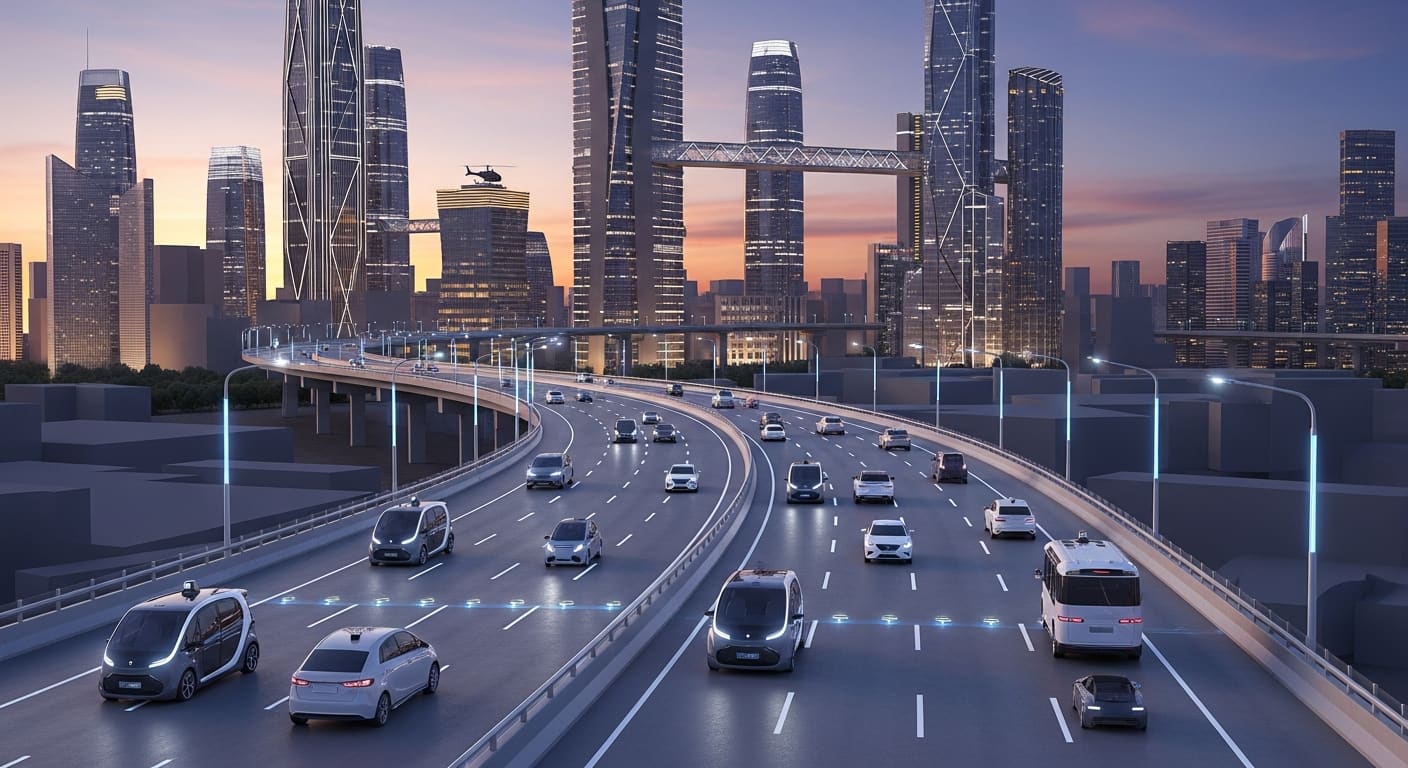
Transportation is in the midst of its greatest transformation since the invention of the automobile. In 2026, the convergence of electric propulsion, autonomous driving, advanced materials, and artificial intelligence is creating transportation systems that are cleaner, safer, faster, and more accessible than anything that has come before. This comprehensive analysis examines the key trends reshaping mobility across the globe.
The Autonomous Vehicle Revolution
Self-driving vehicles have moved from experimental projects to commercial reality. In 2026, autonomous ride-hailing services operate in over 50 cities worldwide, with Waymo, Cruise, Tesla, and Baidu leading deployments across different markets. The combined fleet of commercial autonomous vehicles exceeds 200,000 units globally.
Waymo's service, available in Phoenix, San Francisco, Los Angeles, and several other US cities, completes over 1 million rides per week. Tesla's Robotaxi service, launched across 12 European cities, has demonstrated that autonomous driving technology can handle the complexity of European urban environments, including narrow streets, diverse traffic patterns, and varied weather conditions.
The safety record of autonomous vehicles has been a critical factor in public acceptance. National Highway Traffic Safety Administration (NHTSA) data shows that autonomous vehicles are involved in 73% fewer accidents per mile traveled compared to human-driven vehicles. This safety advantage has accelerated regulatory approval and public adoption across jurisdictions.
Autonomous trucking is another rapidly growing segment. Companies like TuSimple, Aurora, and Kodiak Robotics operate commercial autonomous freight routes across major US highways, reducing shipping costs by approximately 40% compared to traditional trucking. The technology addresses the critical driver shortage facing the logistics industry while improving safety on highways.
Electric Aviation Takes Flight
The electric aviation industry has reached a major inflection point in 2026. Electric vertical takeoff and landing (eVTOL) aircraft are now certified for commercial passenger service in multiple countries, marking the beginning of a new era in urban air mobility.
Joby Aviation and Archer Aviation have launched commercial air taxi services in major US metropolitan areas, offering point-to-point flights that reduce commute times by up to 80% compared to ground transportation. A flight from Manhattan to JFK Airport, for example, takes just 7 minutes compared to an hour or more by car during peak traffic.
Beyond urban air taxis, larger electric and hybrid-electric aircraft are being developed for regional routes. Heart Aerospace's ES-30, a 30-seat electric regional aircraft, has received certification for short-haul flights of up to 200 kilometers. Airlines including SAS, United, and Air Canada have placed orders totaling over 500 aircraft, with deliveries beginning in late 2026.
The environmental impact is significant. Electric aircraft produce zero direct emissions and significantly reduce noise pollution compared to conventional aircraft. The International Air Transport Association (IATA) projects that electric aviation could reduce the industry's carbon footprint by 15% by 2035 if current adoption trends continue.
Hyperloop: From Concept to Reality
The hyperloop concept, first proposed by Elon Musk in 2013, has finally become operational reality. Virgin Hyperloop One's Riyadh-Jeddah corridor in Saudi Arabia represents the world's first commercial hyperloop route, transporting passengers at speeds up to 1,200 kilometers per hour through near-vacuum tubes.
The 950-kilometer journey between Saudi Arabia's two largest cities now takes just 76 minutes, compared to 10 hours by car or 2 hours by plane. The system accommodates 840 passengers per hour in each direction, with departure intervals of just 2 minutes during peak periods.
India has announced plans for its own hyperloop corridor connecting Mumbai and Pune, while several European countries are exploring routes that could connect major cities within minutes. The technology promises to fundamentally reshape regional transportation and reduce dependence on short-haul air travel.
Micromobility and Urban Planning
Cities worldwide are reimagining urban transportation through micromobility solutions and infrastructure redesign. E-bikes, electric scooters, and shared mobility platforms have become integral components of urban transportation networks, particularly for last-mile connectivity.
Paris has emerged as a global model for sustainable urban mobility. The city's comprehensive approach includes expanded cycling infrastructure, pedestrianized zones, and integrated public transit systems that prioritize walking, cycling, and public transportation over private car use. Vehicle traffic in central Paris has decreased by 45% since 2020, while air quality has improved dramatically.
Other cities are following suit. Barcelona's superblocks concept, which restricts car traffic in residential areas to create community spaces, has been adopted in modified forms by cities including Milan, Portland, and Seoul. These urban planning innovations demonstrate that transportation transformation extends beyond new vehicles to encompass fundamental changes in how cities are designed and used.
Sustainable Freight and Logistics
The freight and logistics industry is undergoing its own transformation, driven by electrification, automation, and data analytics. Electric trucks from manufacturers including Tesla, Volvo, Daimler, and Rivian are being deployed for urban and regional delivery routes, with ranges now exceeding 500 kilometers on a single charge.
Amazon's drone delivery network, covering over 100 million US households, has proven that autonomous aerial delivery is commercially viable. The company reports that drone deliveries produce 84% fewer carbon emissions per package compared to traditional truck delivery, while offering significantly faster delivery times.
Maritime shipping, responsible for approximately 3% of global carbon emissions, is also seeing innovation. The first hydrogen-powered container ships are undergoing sea trials, while wind-assisted propulsion systems are being retrofitted to existing vessels, reducing fuel consumption by up to 30%.
The Road Ahead
The transportation revolution of 2026 is just the beginning. Emerging technologies including solid-state batteries, hydrogen fuel cells, supersonic electric jets, and autonomous flying vehicles promise even more dramatic changes in the coming decade. The key challenge will be ensuring that these innovations benefit all communities, not just affluent urban centers, and that the transition to new transportation systems is managed in a way that supports workers and communities affected by the change.